
26th Mar,2026
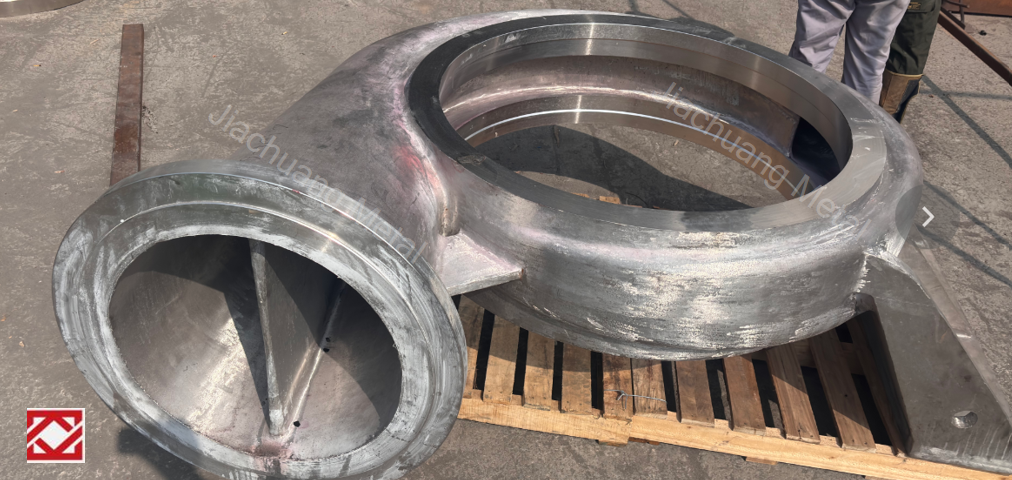
The volute pump is the most common form of centrifugal pump, and the quality of its core component—the pump body casting (i.e., the volute)—directly determines the pump's performance, lifespan, and reliability.
To ensure the performance of the volute pump, the castings must undergo rigorous inspection:
Hydrostatic test: the most critical indicator. All pump body castings must undergo a hydrostatic test (typically 1.5 times the working pressure) and maintain pressure for a specified duration without leakage to verify tightness.
Dimensional inspection: Focus on checking the cross-sectional dimensions of the flow passage, the concentricity of the impeller chamber, and the flatness of the flange sealing surface. Deviations in flow passage dimensions will directly affect the pump's efficiency and head.
Non-Destructive Testing (NDT):
Magnetic particle/penetrant testing (MT/PT): Detect surface cracks.
Ultrasonic/RT (UT/RT): Inspection for internal porosity, slag inclusion, especially for high-pressure cast steel parts.
Material testing: Ensure the chemical composition meets the standards (e.g., carbon equivalent, sulfur and phosphorus content).
Surface roughness: The smoother the internal flow passage, the higher the hydraulic efficiency. Stainless steel precision castings can generally meet the requirements directly, while sand-castings require shot peening or grinding treatment.
According to industry data, common quality issues with snail shell pump castings mainly include:
|Pores/pinholes | Smooth surface or internal pores | High moisture content in molding sand, poor exhaust, high gas content in molten metal | Control molding sand moisture (≤ 5%), optimize exhaust system, and refine molten metal after degassing|
|Shrinkage/looseness | dents or looseness in thick areas (such as flanges and tongues) | insufficient shrinkage filling, unreasonable cooling sequence | reasonable design of risers and cold iron to achieve sequential solidification|
|Cracks | Hot cracking (along grain boundaries, oxidation color) or cold cracking (transgranular, metallic luster) | Structural mutations lead to stress concentration, insufficient annealing, and insufficient material toughness | Increasing transition fillet, strictly controlling stress relief annealing process, optimizing chemical composition|
|Slag inclusion/sand hole | Non metallic inclusions in castings | Poor slag blocking ability of casting system, low sand mold strength, sand flushing | Optimizing sprue cup and filter screen to improve sand mold surface strength|
|Deformation | Dimensional deviation after processing, uneven sealing surface | Release of residual stress, insufficient structural design stiffness | Increase reinforcement ribs, improve clamping methods, and fully address aging issues|