
25th Mar 2026
The chemical performance testing of pump castings is primarily conducted to ensure that the chemical composition of the casting material meets the design requirements and relevant standards, thereby guaranteeing the pump's corrosion resistance, wear resistance, strength, and service life.
The primary objective of detection
Material Verification: Confirm whether the grade of the cast material (such as cast iron, cast steel, stainless steel, bronze, etc.) is correct.
Performance Assurance: The chemical composition directly determines the mechanical properties (strength, hardness) and chemical properties (corrosion resistance, high-temperature resistance) of materials. For instance, the chromium (Cr) and nickel (Ni) content in stainless steel determines its rust-proof capability; the carbon (C) and silicon (Si) content in cast iron affects the graphite morphology and matrix structure.
Process control: Monitor the loss of elements or carbon addition during the smelting process to ensure stable production operations.
Precautions
Segregation issue: Large pump castings may have compositional segregation. It is recommended to take samples from different parts or multiple points of the casting for testing.
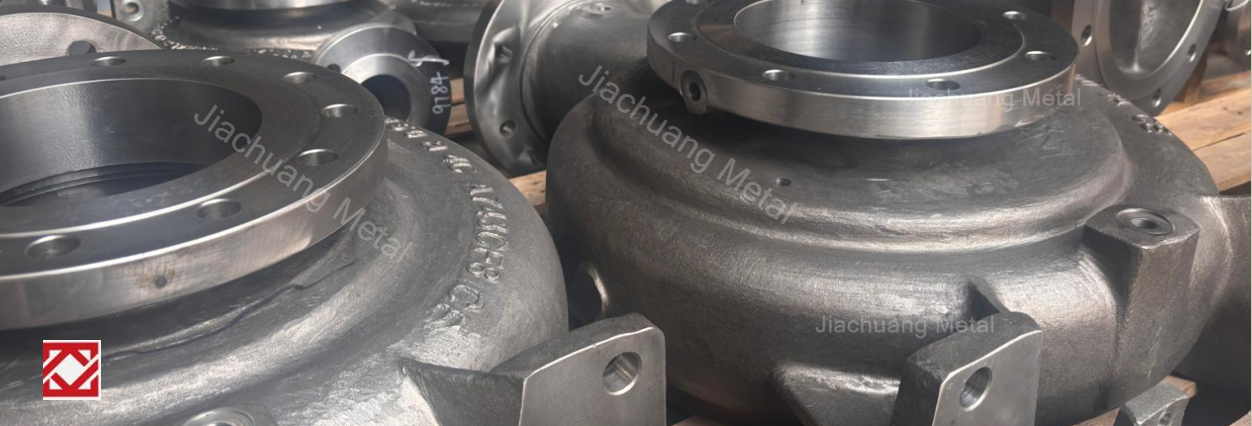
Surface treatment: When using a spectrometer for detection, the detection points must be polished to expose a metallic luster, and sand holes, pores, and oxide layers must be removed.
Re inspection rules: If the initial inspection fails, it is usually allowed to double the sampling near the original sample for re inspection. If the re inspection still fails, the batch of castings will be judged as scrap or re inspected after heat treatment (depending on the specific element exceeding the standard).