
7th April 2026
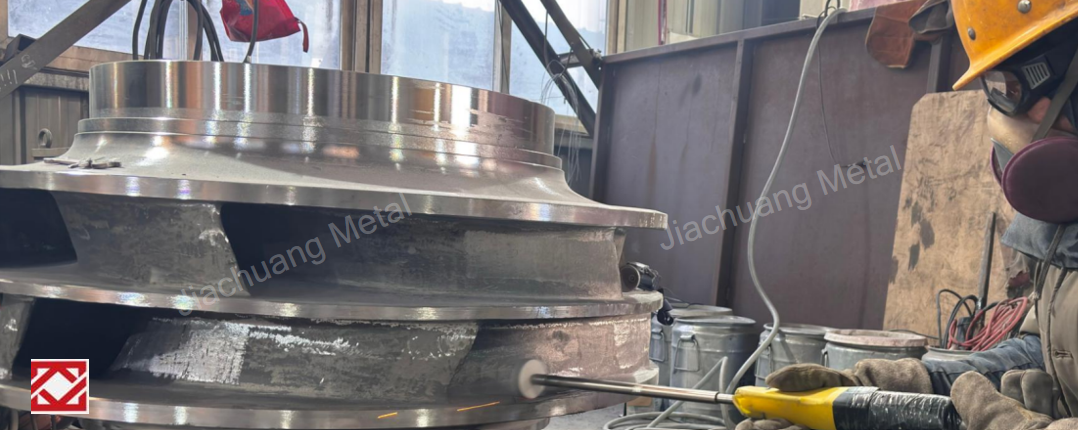
The stainless steel double suction impeller is a core component of centrifugal pumps, widely used in various industrial scenarios due to its symmetrical structnd high flow rate. Its key features and critical information are as follows:
The stainless steel double suction impeller is a core component of centrifugal pumps, widely used in
various industrial scenarios due to its symmetrical structure and high flow rate. Its key features and
critical information are as follows: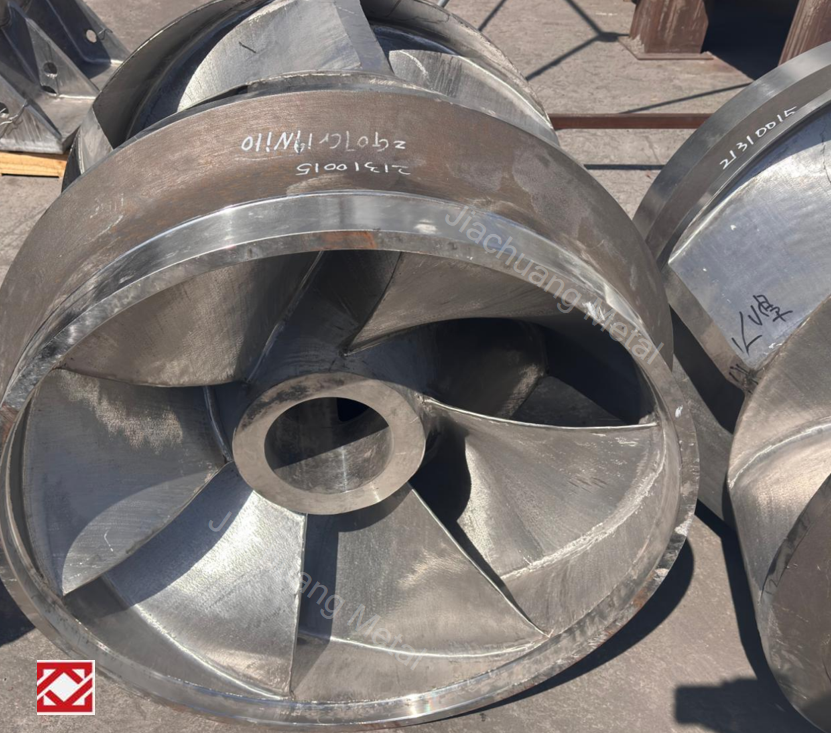
What is a stainless steel double suction impeller?
As the name suggests, a double suction impeller draws liquid into both sides simultaneously, hence it is
also known as a double suction impeller. Compared to a single suction impeller, it offers the following
significant advantages:
High flow rate: Under the same size, the flow rate is twice that of a single suction impeller.
Balanced axial force: Due to symmetrical suction on both sides, axial forces cancel each other out,
resulting in more stable operation and less impact on bearings.
Good cavitation resistance: The double suction design reduces the inlet velocity of the impeller,
effectively improving cavitation resistance.
The stainless steel material endows the impeller with excellent corrosion and wear resistance,
enabling it to handle liquids containing impurities, particles, or corrosive substances.
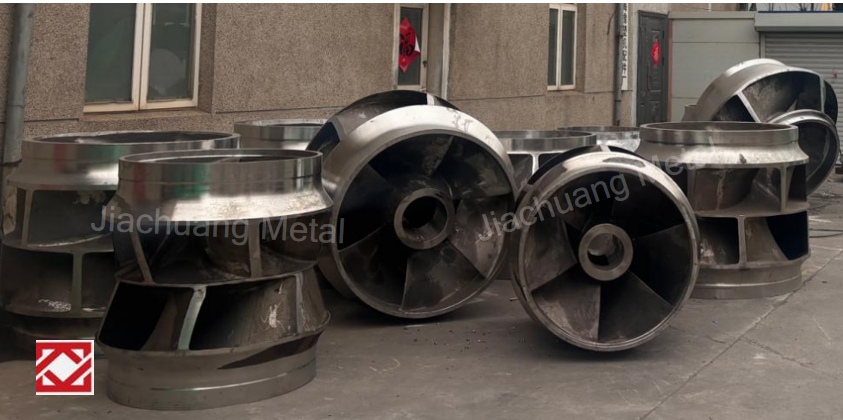
Key Characteristics of Double-Suction Impeller for Stainless Steel
Material selection
304 stainless steel: The most commonly used material, suitable for weakly corrosive media such as freshwater and municipal wastewater.
304 stainless steel double-suction impeller
316/316L stainless steel: Enhanced with molybdenum elements for superior resistance to chloride ion corrosion, suitable for seawater and chemical wastewater environments.
316 stainless steel dual suction impeller, 316L stainless steel dual suction impeller
Biphasic stainless steel (e.g., 2205): Combining the advantages of austenite and ferrite structures, it exhibits higher strength and superior pitting corrosion resistance, making it suitable for chemical environments with high salt fog and severe corrosion conditions.
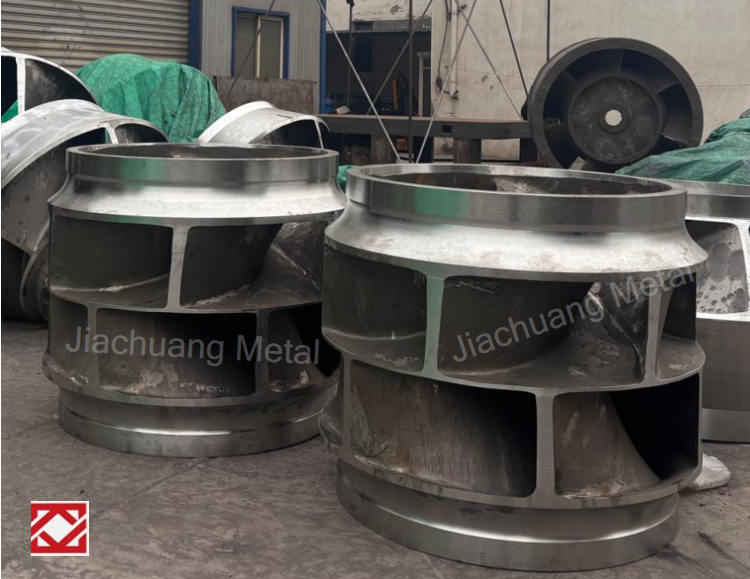
2. Structural form
* Double suction type: As previously mentioned, liquid enters from both sides, representing the standard configuration of a double-suction impeller.
* Enclosed type: The impeller is equipped with cover plates on both sides, completely enclosing the blades.This structure is highly efficient and widely applicable, suitable for transporting clean or fiber-containing liquids in small quantities.
* Semi-open type: Only the rear cover plate is present, with the blades exposed.This structure exhibits high strength and is less prone to clogging, making it widely used for transporting wastewater containing solid particles or fibrous materials, as well as industrial effluents.
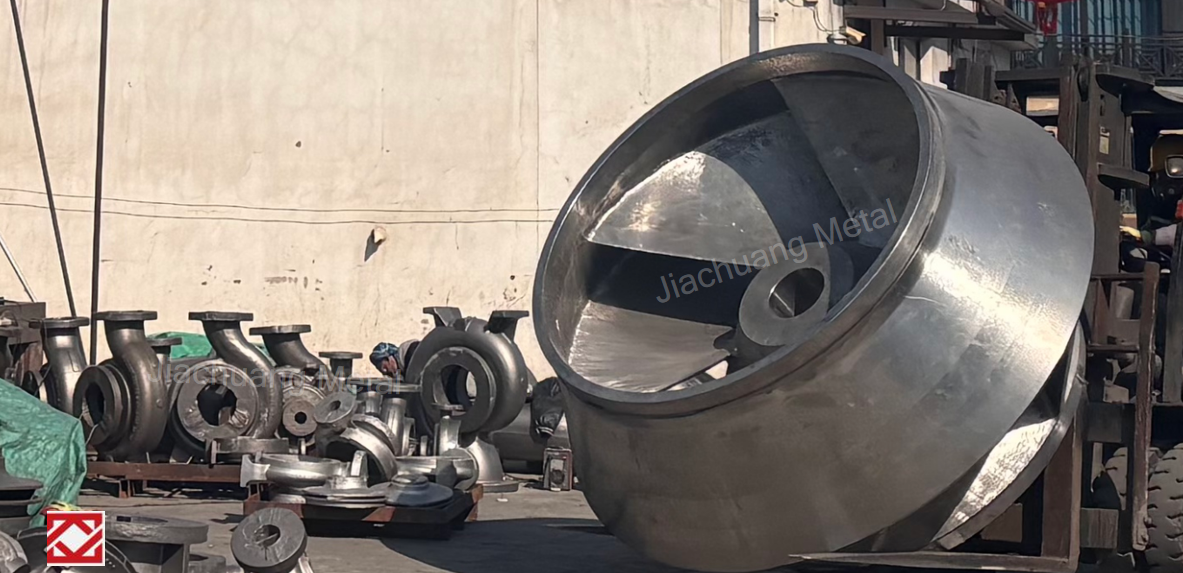
fabrication process
Precision casting: For large impellers with complex structures, precision casting techniques such as silica sol casting and resin sand casting are typically employed.This process enables near-net-shape forming, ensuring the blade shape and dimensional accuracy of the impeller to guarantee hydraulic performance.
Numerical control machining: After precision casting, fine machining is performed using equipment such as CNC milling machines to achieve higher surface finish and dimensional accuracy.
Common use cases
Stainless steel double-suction impellers are widely used in various fields due to their outstanding
performance and corrosion resistance.
Municipal engineering: Drainage and water supply systems for water treatment plants and sewage
treatment plants.
Industrial production: industrial water supply systems, circulating water systems, and air conditioning
cooling water systems.
Mining and Water Conservancy: Mine drainage, deep well drainage, and large vertical shaft drainage
operations.
Shipbuilding industry: marine seawater pumps, ballast water pumps.
Chemical industry: Transport various corrosive chemical liquids.