

In the complex world of industrial fluid handling, the stability of a system often hinges on a single, static component: the chemical pump casing. While the impeller drives the fluid, the casing must contain the pressure, withstand the chemical attack.
For plant managers and procurement engineers, selecting the right material for the chemical pump casing is important. While various plastics and linings have entered the market, Cast Steel (including Carbon Steel and Cast Stainless Steel) remains the dominant, most trusted choice for robust industrial applications.
What Defines a High-Quality Chemical Pump Casing?
The chemical pump casing is the pressure-containing vessel of the pump. Unlike water pumps, a chemical pump casing faces a "triple threat":
Corrosion: Chemical attack from acids, alkalis, and solvents.
Pressure: Internal hydraulic forces that can rupture weaker materials.
Thermal Stress: Rapid temperature changes that can cause cracking.
To combat these threats, Cast Steel is the preferred manufacturing method. Casting allows for complex hydraulic shapes (volutes) to be formed with a seamless, homogenous metal structure, providing distinct advantages over welded fabrications or molded plastics.
The Dominance of Cast Steel in Pump Manufacturing:
When we talk about "Cast Steel" in the context of a chemical pump casing, we are generally referring to two main families: Cast Carbon Steel and Cast Stainless Steel.
Why do engineers prefer Cast Steel casings?
High Pressure Ratings: Steel casings can handle pressures that would shatter plastic pumps.
Temperature Versatility: From cryogenics to super-heated fluids (>400°C), steel maintains its shape and seal.
Safety & Durability: In the event of a fire or mechanical shock, a steel chemical pump casing will not melt or shatter catastrophically, preventing hazardous leaks.
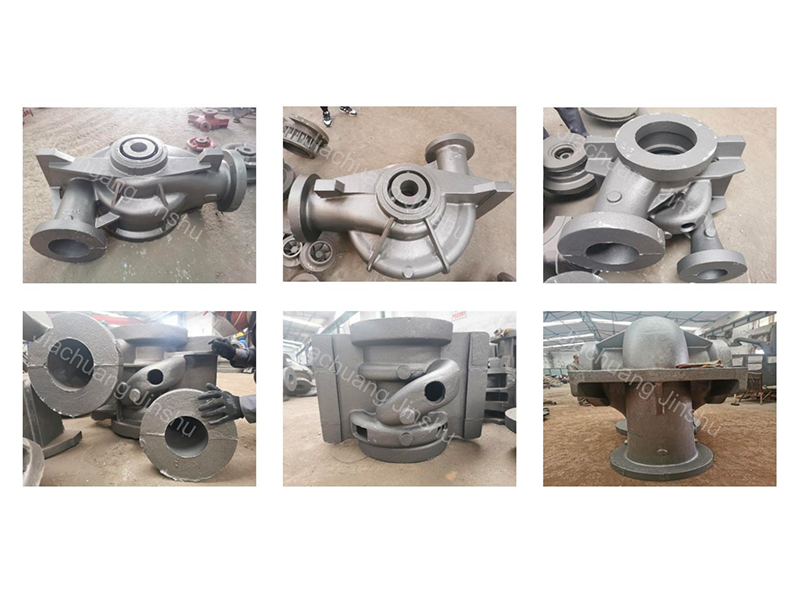
1. Cast Carbon Steel.
For chemical processes involving hydrocarbons, fuels, or non-corrosive high-pressure fluids, Cast Carbon Steel is the standard.
Common Grade: ASTM A216 WCB / WCC
Characteristics: WCB is the most widely used cast steel grade. It offers excellent weldability and toughness. While it does not have the corrosion resistance of stainless steel, it is incredibly strong and cost-effective.
Typical Applications:
Petrochemical refineries.
Boiler feed water.
Neutral chemical transfer where pressure is the main concern.
2. Cast Stainless Steel.
For the vast majority of corrosive chemical applications, Cast Stainless Steel is the material of choice for the chemical pump casing. Note that the naming convention for cast stainless steel differs from wrought steel (e.g., 316 vs. CF8M).
CF8 (Equivalent to 304 Stainless Steel).
Usage: Used for oxidizing acids (like nitric acid) and organic chemicals. It is a general-purpose grade for moderately corrosive environments.
CF8M (Equivalent to 316 Stainless Steel).
The Gold Standard: This is the most popular material for a high-quality chemical pump casing.
Composition: The addition of Molybdenum (2-3%) significantly enhances its resistance to pitting and crevice corrosion caused by chlorides and sulfuric acid solutions.
Why Choose CF8M Casing? It balances cost with excellent performance across a wide range of acids, alkalis, and salt solutions.
CF3M (Equivalent to 316L Stainless Steel).
Low Carbon Advantage: The "L" or "3" indicates low carbon content. This is critical if the chemical pump casing might require repair welding, as it prevents intergranular corrosion (carbide precipitation) during heating.
3. Duplex and Super Duplex Stainless Steel.
When standard CF8M isn't enough—specifically in environments with high chlorides (like seawater) or abrasive slurries—Duplex steels are the solution.
Performance: A Duplex chemical pump casing combines the properties of Ferritic and Austenitic steels. It is roughly twice as strong as standard stainless steel and offers superior resistance to Stress Corrosion Cracking (SCC).
Best For: Desalination plants, phosphoric acid production, and abrasive chemical slurries.