

Although we specialize in steel, it's also important to understand why metal chemical pump casings are chosen over alternative materials such as plastic or cast iron.
Cast Steel vs. Cast Iron.
Cast Iron (Grey Iron or Ductile Iron) is cheaper but brittle.
The Steel Advantage: A chemical pump casing made of Cast Steel has ductility. If hit by a forklift or subjected to "water hammer" (pressure spikes), steel will yield/stretch slightly, whereas cast iron may crack and release hazardous chemicals. For safety-critical chemical plants, Steel is mandatory (API 610 standards often require steel).
Cast Steel vs. Plastics/Linings (PTFE/PP).
Plastic pumps have their niche, primarily in highly corrosive but low-pressure/low-temperature environments.
The Steel Advantage:
Temperature: Plastics soften at 100°C-150°C. Cast Steel casings can operate at 400°C+.
Permeation: Chemicals can permeate through plastic linings, corroding the outer shell. Solid Cast Stainless Steel is impermeable.
Mechanical Strength: Piping loads (stress from connecting pipes) can crack plastic flanges. A Cast Steel chemical pump casing acts as a robust anchor point for the piping system.
Manufacturing Excellence: Investment vs. Sand Casting.
The quality of your chemical pump casing depends heavily on how it is cast. As a premium supplier, we utilize advanced casting techniques to ensure hydraulic efficiency and material purity.
Investment Casting (Lost Wax).
For precision chemical pumps, investment casting is preferred.
Smooth Finish: Produces a very smooth surface finish inside the casing volute. This reduces friction loss, increasing the pump's hydraulic efficiency.
Precision: Allows for tight tolerances, ensuring the casing fits perfectly with the impeller and mechanical seal.
Defect-Free: Reduces the risk of porosity (air pockets) in the metal, which is critical for preventing leaks under high pressure.
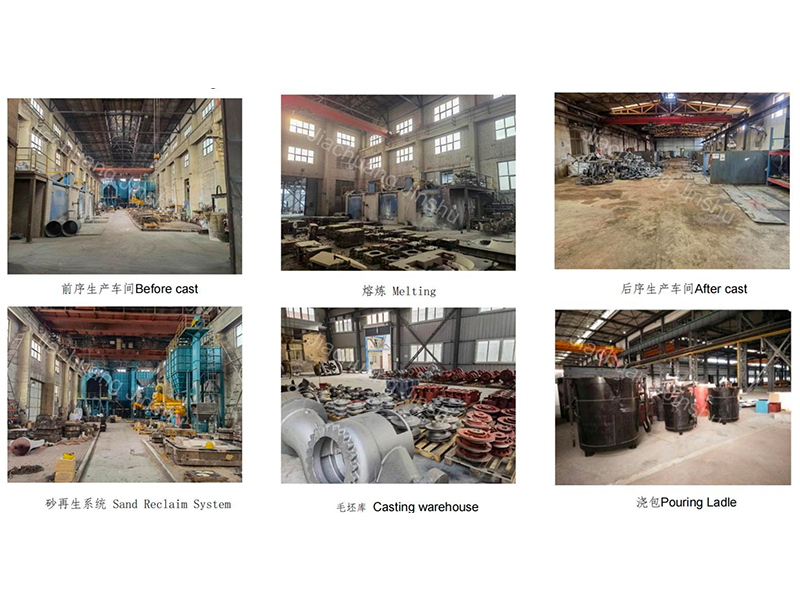
Sand Casting.
Used for larger chemical pump casings. Modern resin sand casting techniques allow for good surface finishes on large, heavy-duty pumps (e.g., exceeding 500kg).
Regarding sand casting: the smallest single casting can weigh tens of kilograms, and the largest single casting can weigh 8-10 tons.
How to Specify the Right Cast Steel Casing?
When ordering a chemical pump casing, clarity on material grades is essential to avoid failure.
Define the Media: Don't just say "Acid." Specify "Sulfuric Acid, 30%, 80°C". This determines if you need CF8M or CD4MCu.
Check the Standard: Ensure the casting meets ASTM standards (e.g., ASTM A351 for stainless). Low-quality "commercial" steel often lacks the correct alloy elements for corrosion resistance.
Look for Heat Treatment: High-quality Cast Stainless Steel casings must be "Solution Annealed." This process maximizes corrosion resistance. A casing without proper heat treatment will rust quickly, even if the chemistry is correct.
Pressure Class: Ensure the casing wall thickness and flange design meet the required pressure class (e.g., ANSI 150#, ANSI 300#).