

"Double suction impeller" (generally referring to a centrifugal impeller with symmetrical inflow and
outflow on both sides or "impeller for double suction centrifugal pumps") is often used in situations
where it is necessary to reduce axial force, enhance stability and efficiency. Below are the common
applications and reasons listed according to typical scenarios.
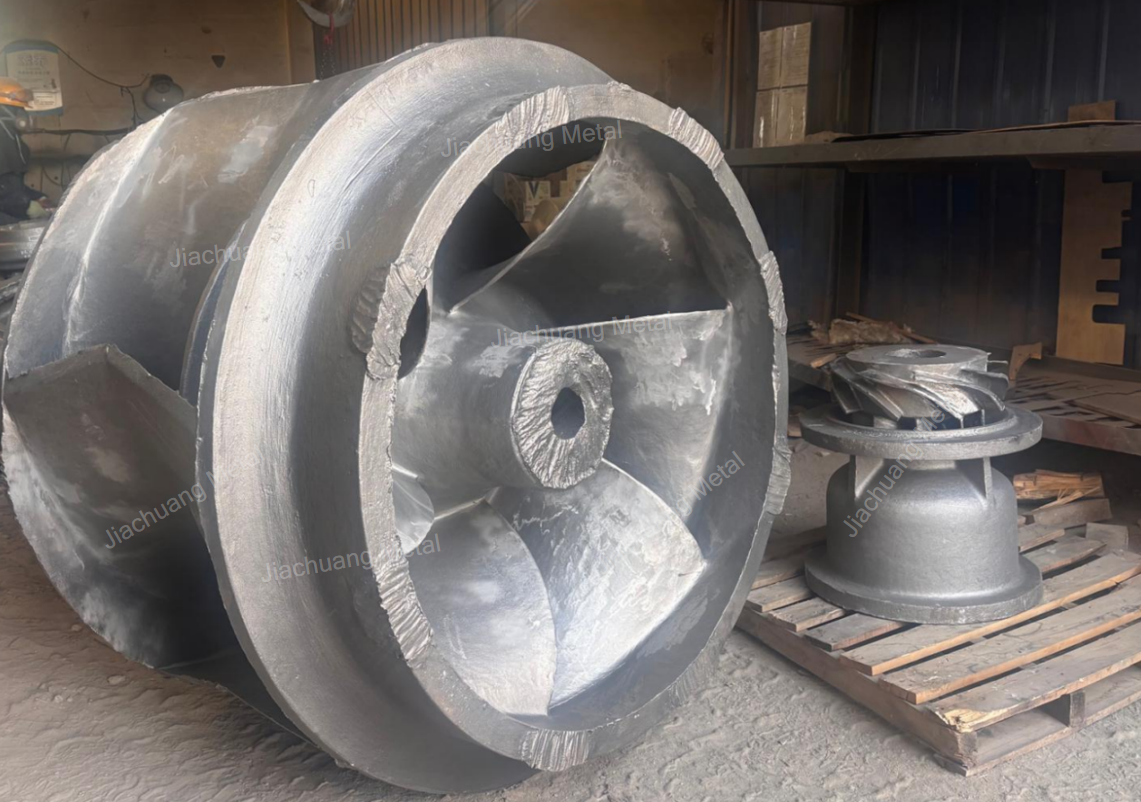
1) Double-suction centrifugal pump (the most typical)
Municipal water supply and drainage, industrial circulating water
Boiler feed water, condensate water, etc. (depending on the structure and sealing)
Rainwater/sewage lifting (different selections will be made for the medium's solid content and the form
of the impeller)
Reason: The forces on both sides of the double-suction impeller are basically symmetrical, which can
significantly offset the axial thrust, making the pump more stable during operation and more conducive to extending the life of the bearings/seals.
2) Medium transportation in the chemical and petrochemical industries
Transportation of clean or slightly corrosive liquids (such as solvents, process liquids, and cooling liquids)
Applications prone to cavitation or with high stability requirements (combined with NPSH verification)
Reasons: The axial force is relatively small, which is conducive to the reliable operation of high-speed or
high-pressure systems; it is more friendly to long-term operating conditions.
3) High-flow, engineered water supply systems
High-flow pressure-stabilized water supply
Fire-fighting pressurization (common in pump group systems)
Heat network circulation (heating/cooling heat exchange systems)
Reason: The double-suction design usually offers greater flow capacity while maintaining good stability.
4) Applications where vibration reduction and extended seal life are required
Pumps for equipment sensitive to vibration
Working conditions with strict requirements for mechanical seals
Reason: Due to the axial force balance, the rotor is subjected to more uniform forces, often reducing the
risks of eccentric wear and leakage.
5) Waste heat recovery, cooling systems, etc.
Cooling water circulation
Circulation pumps in the heat exchanger loop
Reason: The system operates continuously, and the changes in working conditions are relatively small
and predictable. The stability advantage of double-suction impellers is obvious.
Key Points for Selection (Brief)
Flow/Head Range: Different impeller diameters, widths, and blade angles determine performance points.
Medium Characteristics: Viscosity, solid content, and corrosiveness (determine material and impeller/seal form).
Cavitation Check (NPSH): Double suction pumps still need to meet suction conditions.
Axial Force and Seal Structure Matching: Double suction mainly balances axial thrust, but it still depends
on the specific pump type and seal scheme.