
18th Mar. 2026
The Pump impeller (double suction impeller) of a medium open pump is the core component for achieving high flow and stable operation. Essentially, it is a symmetrical fusion of two back-to-back single suction impellers.
Wide range of applications
It can be used for clean water, circulating water, oil products, and neutral chemical media. The API610 BB1 double suction impeller can meet the high-temperature and high-pressure working conditions of petrochemicals.
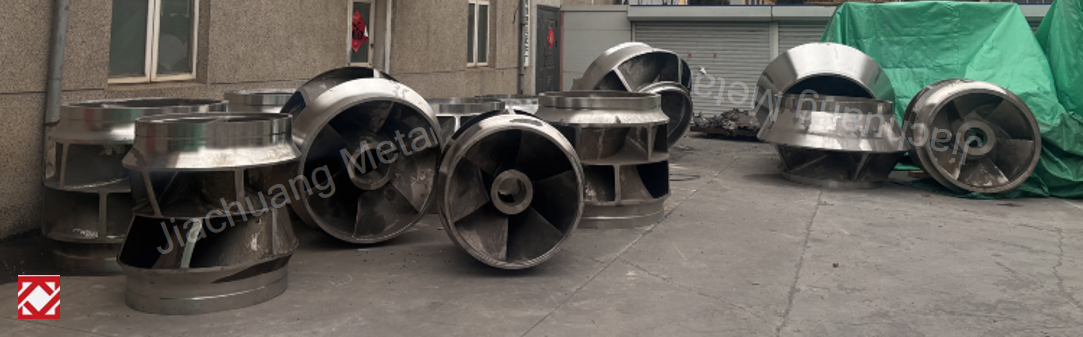
Double suction impeller of medium open pump: structure, performance and core advantages
The double suction impeller is a key core component for achieving high flow rate, high efficiency, long service life, and smooth operation of a mid opening centrifugal pump. It is also a distinctive structure that distinguishes mid opening pumps from ordinary single suction pumps. It adopts a double-sided symmetrical inlet and integrated symmetrical flow channel design, which is equivalent to combining two single suction impellers back-to-back. It has significant advantages in hydraulic performance, mechanical reliability, and maintainability.
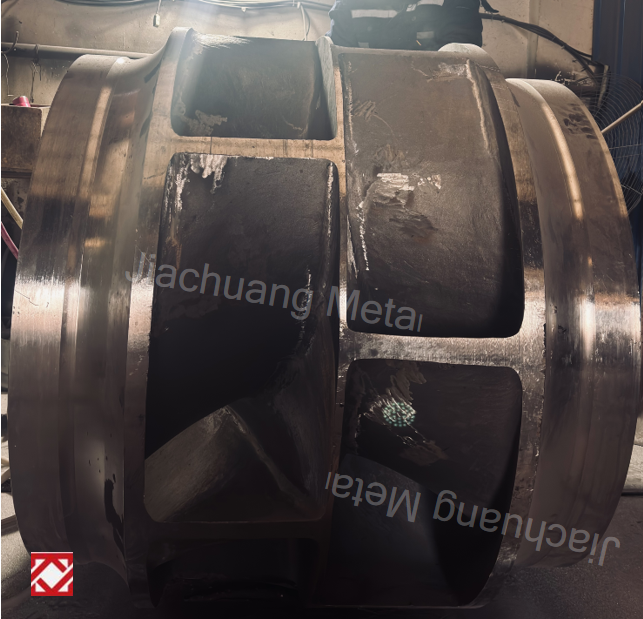
The most prominent feature of a double suction impeller is its completely symmetrical structure. Both sides of the impeller are equipped with water inlet ports, and the liquid enters the center of the impeller from both ends at the same time. After the blades do work, it is discharged radially from the middle. This symmetrical structure allows the liquid pressure on both sides of the impeller to cancel each other out during rotation, achieving self balancing of axial forces. Compared with single suction impellers, it does not require balancing holes, balancing disks, or large-sized thrust bearings to counteract axial thrust, significantly reducing bearing load, minimizing wear and failure, significantly extending the service life of bearings and the entire machine, and making the pump more stable in long-term continuous operation.
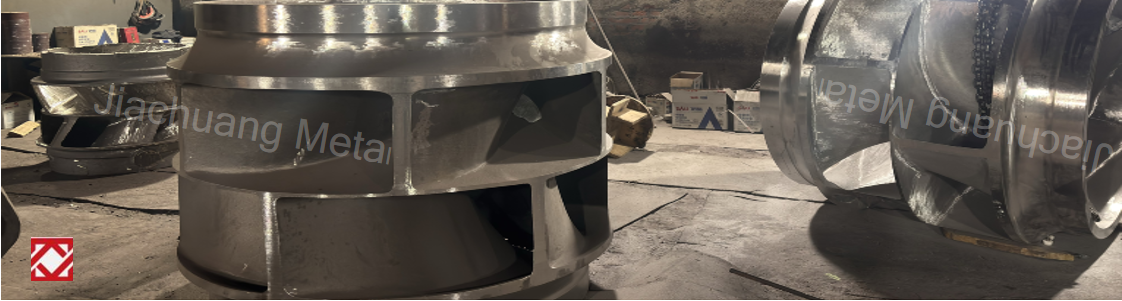
In terms of hydraulic performance, double suction impellers have three major advantages: high flow rate, low cavitation, and high efficiency. The dual inlet design significantly increases the effective flow area, and under the same impeller diameter, the flow rate can be close to twice that of a single suction pump, making it particularly suitable for high flow conveying needs. At the same time, dual inlet water reduces the inlet flow rate, reduces the required cavitation head (NPSHr), and has better anti cavitation performance, which can effectively avoid surface erosion, vibration, and efficiency decline of the impeller. The wide flow channel and rear curved blades optimized by CFD fluid make the double suction impeller have small hydraulic losses, wide high-efficiency range, and more energy-efficient operation, especially suitable for scenarios such as 24-hour uninterrupted operation of circulating water and water supply main pumps.
As the core hydraulic component of a double suction pump, the casting quality of the double suction impeller directly determines the efficiency, vibration, service life, and operational stability of the pump. Due to the symmetrical structure of the double suction impeller, double-sided inlet, middle outlet, long and complex flow channel, the casting difficulty is much higher than that of ordinary single suction impellers, and strict requirements are placed on dimensional accuracy, surface quality, internal defects, and material density.
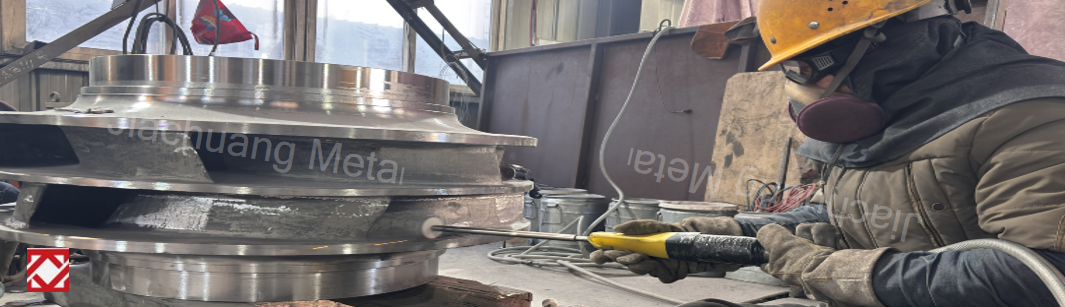
Special requirements for casting of double suction impeller structure
The double suction impeller is a symmetrical closed structure, with suction ports on both sides and a common pressurized area in the middle. The blades are twisted in space, and the channel length and wall thickness distribution are uneven. This structure brings three major casting difficulties:
High precision requirements for bilateral symmetry: the left and right inlets, blades, and cover plates must be strictly symmetrical, otherwise it will disrupt hydraulic balance and cause vibration and axial force displacement.
Difficulty in forming blades: The blades are spatial curved surfaces with thin thickness and large distortion, which can easily lead to defects such as insufficient watering, cold insulation, air holes, and sand holes.
Smooth transition of wall thickness is required: the connection between the cover plate, hub, and blade is prone to thermal joints, which can cause shrinkage and looseness, affecting strength and service life.