

Why Standard Pump Casings Fail in Chemical Processing:
In chemical processing plants, the pump casing is the primary containment vessel. Failure here isn't just a maintenance issue; it's a safety hazard. From our experience at Dalian Jiachuang Metal Manufacturing Co., Ltd., premature casing failure usually stems from two root causes: incorrect material selection for the specific medium, or internal casting defects (such as shrinkage porosity) that compromise the pressure boundary.
As a foundry dedicated exclusively to cast steel and sand casting processes, we want to share how we engineer stainless steel pump casings to withstand these industrial demands.
1. Material Selection: Beyond Standard Carbon Steel.
While WCB (Carbon Steel) is sufficient for water or oil, it dissolves rapidly in acidic or chloride-rich environments. For the chemical industry, the metallurgical composition must be precise.
We focus on casting Austenitic and Duplex Stainless Steels. The "Top-Rated" performance comes from the specific grade properties:
CF8 (SS304): Used for oxidizing acids (e.g., nitric acid).
CF8M (SS316): The industry workhorse. The addition of Molybdenum greatly improves resistance to pitting corrosion caused by chlorides and sulfates.
CF3M (SS316L): The low-carbon version we use when the part requires extensive welding, preventing intergranular corrosion.
At our facility, we verify the chemical composition of the molten metal using a spectrometer before pouring. If the Nickel or Molybdenum content is off by even 0.1%, we adjust the melt. We don't guess.
2. The Process: Why Sand Casting for Chemical pump casing?
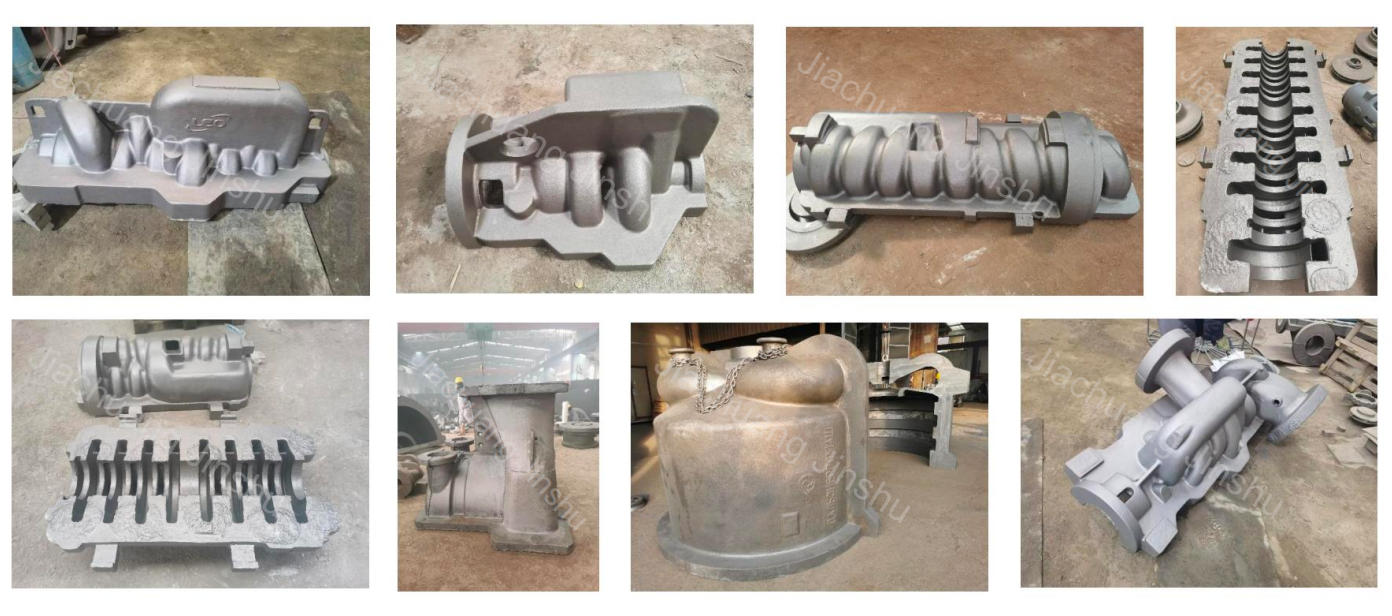
Chemical pump casings often feature complex volutes and heavy flanges.
Our Chemical pump casing utilize Sand Casting (specifically Resin Sand molding) for these components for specific technical reasons:
Handling Steel Shrinkage: Steel shrinks significantly more than cast iron during solidification. Our sand mold design incorporates calculated risers and gating systems to feed the casting as it cools. This prevents internal shrinkage voids—a critical factor for pumps operating under high pressure.
Surface & Dimensions: Resin sand provides a rigid mold, ensuring that the heavy flanges remain flat and the bolt holes retain their position tolerance.
Design Flexibility: For OEMs needing custom flow geometries to improve pump efficiency, sand casting allows us to modify patterns quickly without the prohibitive cost of metal dies.
3. The "Pure Steel" Advantage.
One detail often customized in our industry is cross-contamination. Many foundries cast both iron and steel in the same workshop. This can introduce trace amounts of sulfur or phosphorus into the stainless steel, destroying its corrosion resistance.
Dalian Jiachuang Metal Manufacturing Co., Ltd. is a Cast Steel-Only facility. We do not cast iron. This segregation is deliberate. It ensures that when you order a Stainless Steel pump casing, the material structure is pure, clean, and performs exactly as the ASTM standards dictate.
4. Quality Assurance: What Happens After Casting.
A casting might look good on the outside but fail under pressure. Our technical protocol includes:
Solution Annealing: We heat treat our stainless steel Chemical pump casing to dissolve carbides and restore the corrosion-resistant passive layer.
Non-Destructive Testing (NDT): We employ PT (Penetrant Testing) to detect surface cracks and UT/RT (Ultrasonic/Radiographic) upon request to verify internal integrity.
Hydrostatic Testing Prep: We ensure the rough casting has sufficient machining allowance so that after your machining, the wall thickness meets the safety design factor.