

In the critical infrastructure of the energy and petrochemical sectors, the reliability of rotating equipment is non-negotiable. From the hydrocarbon cracking units in refineries to the high-pressure feed systems in thermal power plants and the cryogenic transfer lines of LNG terminals, the structural integrity of pump components is the bedrock of operational safety. Specifically, for critical pump configurations such as OH (Overhung), BB (Between Bearings), and VS (Vertically Suspended) types, the quality of the steel casting—be it the volute casing, impeller—dictates the equipment's Mean Time Between Failures.
Our engineering department approaches steel casting not merely as a manufacturing process, but as a materials science discipline. We understand that for our B2B partners, the casting is the foundation upon which their complex machinery is built.
1. API 610 Compliance: Precision in Petrochemical Applications.
The petrochemical industry, governed largely by API 610 standards, demands castings that offer exceptional dimensional stability and hydraulic performance.
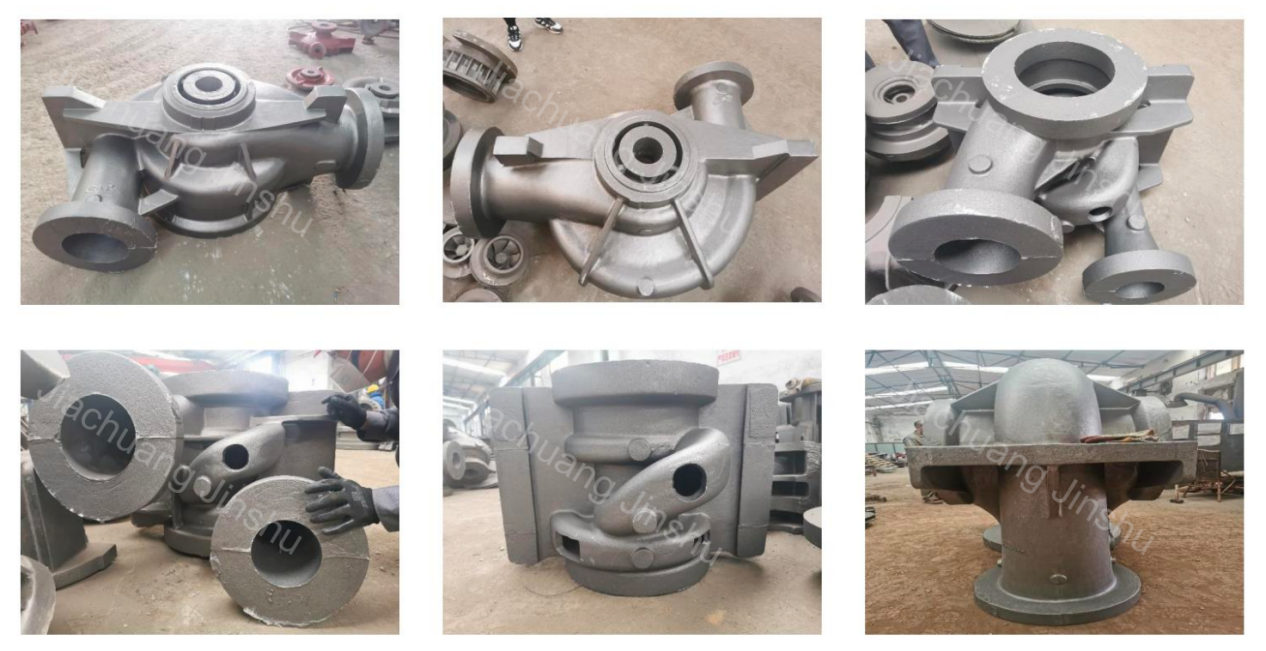
Complex Geometries in VS and BB Pumps: Pumps such as the VS1, VS6, and multi-stage BB types often feature intricate internal geometries with varying wall thicknesses. A common challenge in casting these components is managing the solidification rate to prevent shrinkage porosity in heavy sections while avoiding cold shuts in thinner vanes. We utilize advanced casting simulation software to optimize riser placement and gating systems before the first pour. This ensures a dense, defect-free structure throughout the pump casing.
Surface Finish and Hydraulic Efficiency: Turbulence causes energy loss and accelerated wear. Our molding processes are designed to produce superior surface finishes on internal flow passages. By minimizing surface roughness in the impeller and volute channels, we help pump manufacturers achieve their target hydraulic efficiency curves without excessive post-casting grinding.
Pressure Containment: For API 682 seal chambers and high-pressure casings, porosity is unacceptable. We implement rigorous Non-Destructive Testing (NDT) protocols, including Radiographic Testing (RT) and Magnetic Particle Inspection (MPI), to verify that all pressure-retaining boundaries are free from subsurface defects that could lead to leakage or catastrophic rupture.
2. Thermal Power: Combating Creep and Thermal Fatigue.
In thermal and gas turbine power generation, boiler feed pumps operate under extreme cyclic thermal loads and high pressures.
Material Stability at High Temperatures: The primary failure mode for castings in these environments is creep—the tendency of a solid material to move slowly or deform permanently under the influence of mechanical stresses. To combat this, we meticulously control the alloy composition (such as Chrome-Moly steels) and the heat treatment cycles.
Heat Treatment Precision: Our normalization and tempering processes are monitored with precision calibrated thermocouples attached directly to the castings. This ensures that the entire cross-section of the heavy pump casing achieves the required transformation temperature, resulting in a uniform grain structure that provides optimal high-temperature yield strength and resistance to thermal fatigue.
3. LNG and Cryogenic Applications: Impact Toughness at -162°C
The rapid expansion of the LNG sector requires pumps that can operate reliably in cryogenic conditions.
Metallurgy for the Extreme Cold: At -162°C, standard carbon steels become brittle and prone to catastrophic fracture. For these applications, we specialize in casting Low Temperature Carbon Steels (LTCS) and Austenitic Stainless Steels.
Impurity Control: The presence of impurities like Sulfur and Phosphorus can severely compromise low-temperature toughness. Our melting process involves strict refining protocols to minimize these inclusions.
Test results come from early collaboration. Our engineering team is ready to review your technical drawings and material specifications. We provide not just a price quote, but a comprehensive manufacturing plan that addresses potential casting challenges upfront.
Contact our technical sales department today to discuss your specific requirements for high-specification steel castings. Let us provide the metallurgical certainty your projects demand.