

The selection of cast steel materials for pump impellers and their surface treatment processes are critical factors determining their performance, efficiency, and service life. These two aspects complement each other and work together to address challenges under various operating conditions.
Common Cast Steel Materials for Pump Impellers
Selecting the appropriate cast steel material is the first step in ensuring impeller performance, requiring comprehensive consideration of factors such as the corrosiveness, abrasiveness, temperature, and pressure of the transported medium.
Cast Steel
It features high strength and excellent impact resistance, making it suitable for high-pressure or heavily loaded industrial pumps. Its comprehensive mechanical properties surpass those of cast iron, making it a common choice for many general-purpose applications.
Stainless Steel
Due to its excellent corrosion resistance, it is widely used in pumps for conveying corrosive media such as seawater and chemicals. For example, high-alloy austenitic heat-resistant cast steel (e.g., ZG40Cr25Ni20Si2), containing high chromium and nickel content, not only resists corrosion but also maintains structural stability at high temperatures, making it suitable for conveying high-temperature hot water or corrosive slurries.
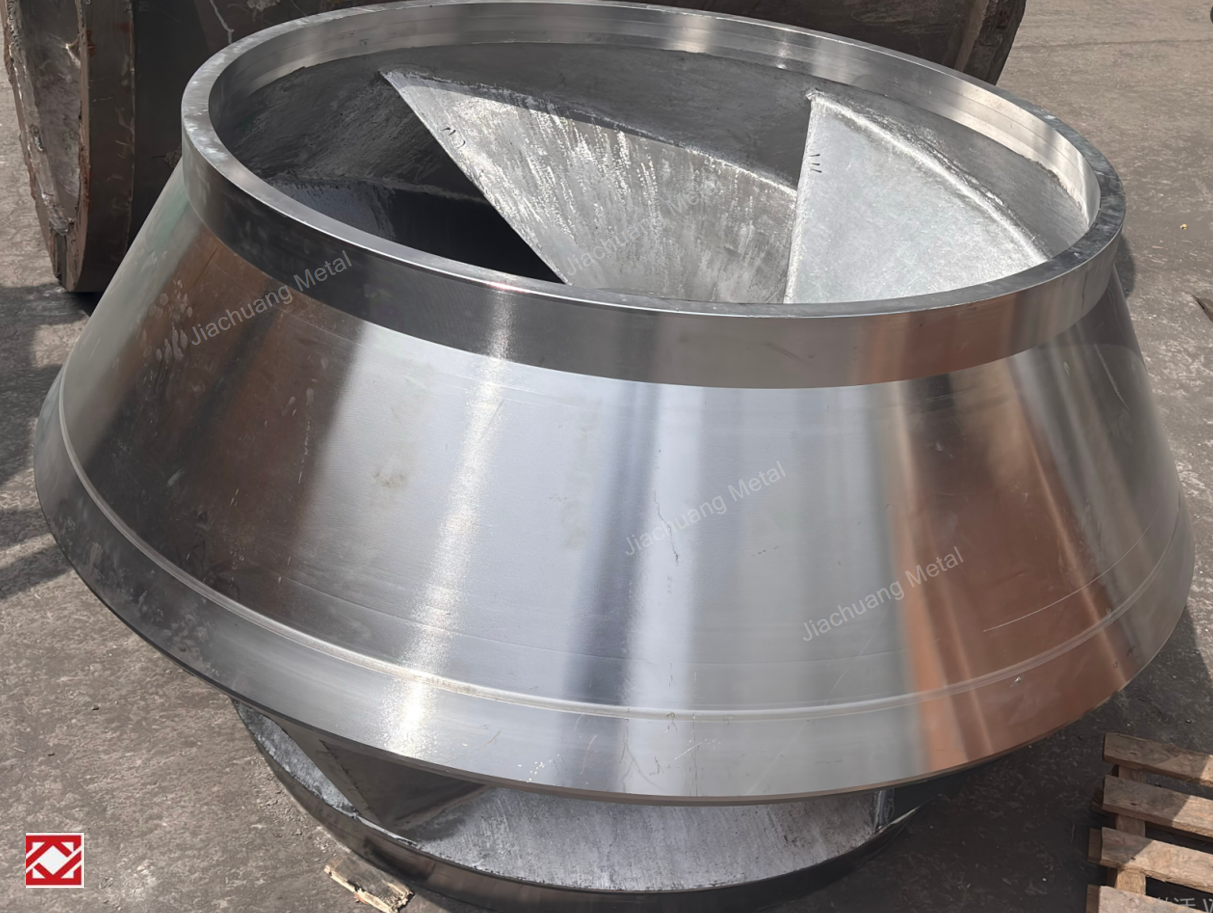
High-Chromium Cast Iron
It performs excellently under extreme working conditions where wear and corrosion coexist. For instance, in the desulfurization slurry circulation pumps of thermal power plants, high chromium cast iron (such as Cr30A) demonstrates outstanding resistance to corrosion wear due to its high-hardness carbide hard phase, with a service life far exceeding that of ordinary materials.
Surface Finishing and Strengthening Technologies
This type of technology primarily enhances performance by improving the physical state of the surface.
Sandblasting flow processing (AFM)
By utilizing a viscous medium containing abrasives flowing through the complex internal passages of the impeller, uniform polishing and deburring are achieved. This process can reduce surface roughness (Ra value) from 0.8 µm to 0.2 µm, making it particularly suitable for impellers with intricate geometric shapes and significantly improving hydrodynamic performance.
Shot peening
By impacting the impeller surface with high-speed projectiles, the primary objective is to generate a uniform compressive stress layer on the surface, thereby enhancing the material's fatigue strength. Additionally, this process also serves to clean the surface and remove oxide scale, commonly applied to slurry pump impellers subjected to cyclic loading.
The Core Value of Surface Treatment
Proper surface treatment of the impeller can yield the following three direct benefits:
Improve hydraulic efficiency and achieve energy savings and consumption reduction
The surface finish of the impeller directly affects the pump's efficiency. The smoother the surface, the less frictional resistance the fluid encounters, resulting in reduced energy loss. Experiments show that reducing the surface roughness Ra value of the impeller from 3.2 µm to 0.8 µm can increase the pump's efficiency by approximately 4%. For large and medium-sized pump units operating continuously over extended periods, this translates to significant energy savings.
Enhance durability and extend service life
In harsh environments where corrosion, wear, and cavitation coexist, material failure often results from the interaction of multiple factors. High-performance coatings (such as thermal spray carbide coatings) or strengthening treatments (like shot peening) can effectively isolate the medium and resist particle impact, significantly extending the impeller's service life, reducing replacement frequency, and lowering maintenance costs.
Provide cost-effective repair solutions
For expensive, damaged impellers, repairing them using remanufacturing techniques such as overlay welding and spray-on wear-resistant coatings is an economically efficient solution. The repair cost typically accounts for only 30% to 40% of the price of a new impeller, and by selecting more advanced surface materials, the performance of the repaired impeller can even surpass that of a new one.