

23th Mar. 2026
In the modern industrial system, pumps are hailed as the "heart of industry," with their performance directly impacting the efficiency and stability of fluid transportation systems. Pump components (such as impellers, pump casings, and guide vanes) serve as the core elements
of a pump, and their manufacturing quality determines the lifespan, energy efficiency, and reliability of the entire pump. Traditional pump component manufacturing often involves multiple scattered suppliers: mold factories for tooling, foundries for casting, and machining plants for cutting. This segmented model tends to lead to issues such as high communication costs, difficult quality traceability, and extended delivery cycles.
With the continuous rise in demands for precision and efficiency in the high-end equipment manufacturing industry, the "mold-casting-machining integration" manufacturing model has emerged. This fully closed-loop production approach not only achieves seamless connectivity from raw materials to finished products but also significantly enhances the comprehensive performance of pump components through process synergy optimization.
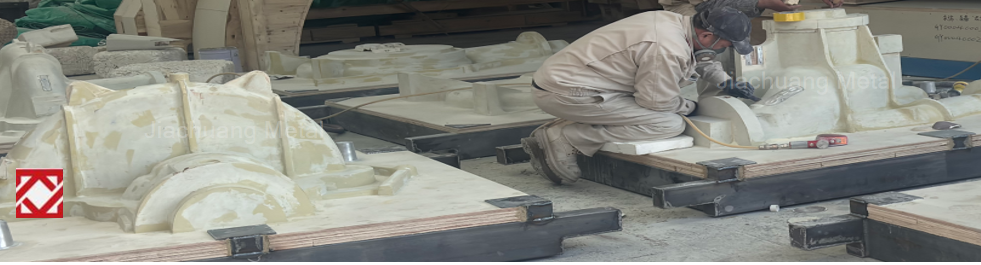
High-Precision Mold Design and Manufacturing
Everything begins with the mold. For pump components, especially complex impellers and pump housings with intricate flow channels, the precision of the mold directly determines the initial quality of the castings.
Under the integrated model, mold design no longer exists in isolation but is deeply coupled with subsequent casting and machining processes
Simulation-driven design: Utilize casting simulation software such as MAGMAsoft or ProCAST to conduct full-scale simulations of the filling process, solidification sequence, and risks of shrinkage and porosity before mold opening. Designers optimize the gating and riser system accordingly to ensure stable metal flow, minimizing defects like porosity and slag inclusions at the source.
Optimization of Machining Allowance: In traditional approaches, excessive machining allowances are often reserved as a precaution, increasing subsequent machining costs. The integrated team can precisely calculate the minimum necessary allowance based on machining capabilities, ensuring accurate processing while saving materials and labor hours.
Rapid Response Iteration: When product design changes occur, the internal mold workshop can quickly adjust CNC programs to shorten mold modification cycles and ensure the speed of new product development.
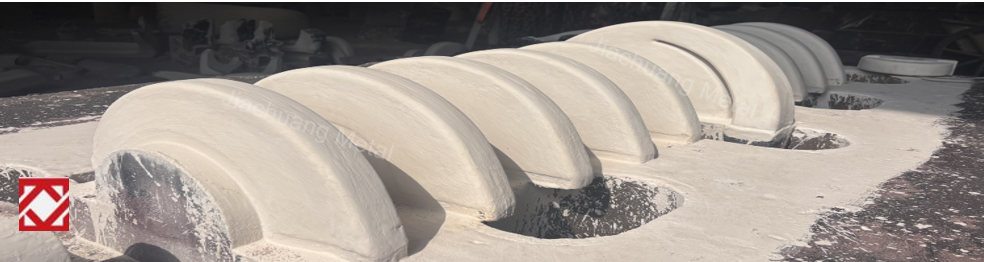
Core Formation: Precision Implementation of Advanced Casting Technologies
Castings serve as the "skeleton" of pump components. In an integrated workshop, the casting process can fully leverage the optimized results of mold design and implement customized techniques tailored to specific pump materials (such as stainless steel 304/316, duplex steel, cast iron, or bronze).
Material Purity Control: Integrated production facilitates the establishment of strict smelting standards. Real-time chemical composition monitoring is achieved through spectral analysis, while refining and degassing techniques ensure the purity of the molten metal, fundamentally enhancing the corrosion resistance and fatigue strength of pump components.
Process Consistency: Since the mold, shaping, and smelting occur within the same system, the control of process parameters (such as pouring temperature and cooling rate) is more stable. For instance, for high-alloy steel impellers prone to thermal cracking, controllable cooling sand mold or lost foam casting can be employed to effectively reduce internal stress.
Pre-loss inspection: Immediately conduct X-ray flaw detection or ultrasonic testing after the casting is removed from the production line. Non-compliant products are directly returned to the furnace to prevent them from entering subsequent costly machining stages, significantly reducing scrap losses.
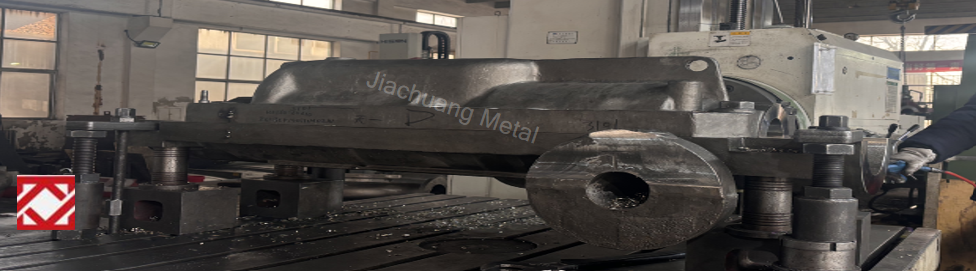
Striving for excellence: efficient and precise machining
The blank formed by casting needs to be machined to achieve the final dimensional accuracy and surface smoothness requirements to meet the hydraulic performance indicators of the pump. The integrated model demonstrates significant collaborative advantages at this stage.
Standardization and fixture optimization: The machining team directly participates in casting process discussions and can design specialized process bosses or positioning benchmarks on the castings to ensure consistency in positioning during multi process machining and reduce cumulative errors.
Dealing with difficult to process materials: Pump components often involve high hardness stainless steel or wear-resistant alloys. Integrated enterprises can be equipped with five axis linkage machining centers, turning milling composite centers, and develop specialized tool and cutting parameter libraries to efficiently solve the problem of blade surface machining.
Online detection and feedback loop: When dimensional deviations are detected by a coordinate measuring machine (CMM), the data can be directly fed back to the casting or mold department. For example, if it is found that the wall thickness in a certain area is generally thin, the mold size can be immediately corrected to achieve a real-time closed-loop of "manufacturing testing improvement".
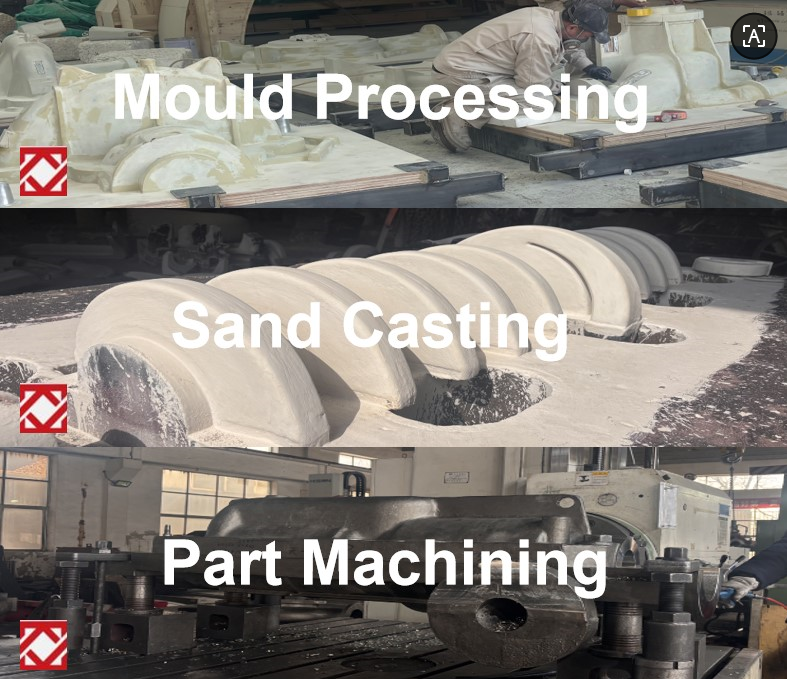
The core value of integrated mode
Integrating molds, casting, and machining into a one-stop manufacturing system is not only a concentration of physical space, but also a reconstruction of management logic and technology chain. The value it brings is obvious:
Strong quality traceability: from a single drawing to the final product, all process data, operation records, and inspection reports are circulated in one system. Once there is a quality issue on the market side, it can quickly locate the specific melting furnace, mold number, and even machine tool repair records.
The delivery cycle has been significantly shortened: eliminating the time loss of external logistics turnover and multi-party coordination. According to statistics, the integrated mode can shorten the average delivery cycle of pump components by 30% -50%, especially suitable for emergency spare parts supply and rapid prototyping of new projects.
Comprehensive cost optimization: Although the initial investment is relatively large, the long-term significant reduction in single piece manufacturing costs is achieved by reducing scrap rates, optimizing material utilization, reducing inventory backlog, and managing communication costs.
Technological innovation collaboration: R&D personnel can comprehensively consider material characteristics, molding limitations, and processing capabilities to design pump component structures with better performance and easier manufacturing, promoting product iteration and upgrading.