

30th Mar 2026
The impeller of the vertical axial flow pump is made of duplex steel 2205 material, mainly to cope with strong corrosive working conditions such as seawater and chemical industry, in order to significantly improve the service life and operational reliability of the equipment.
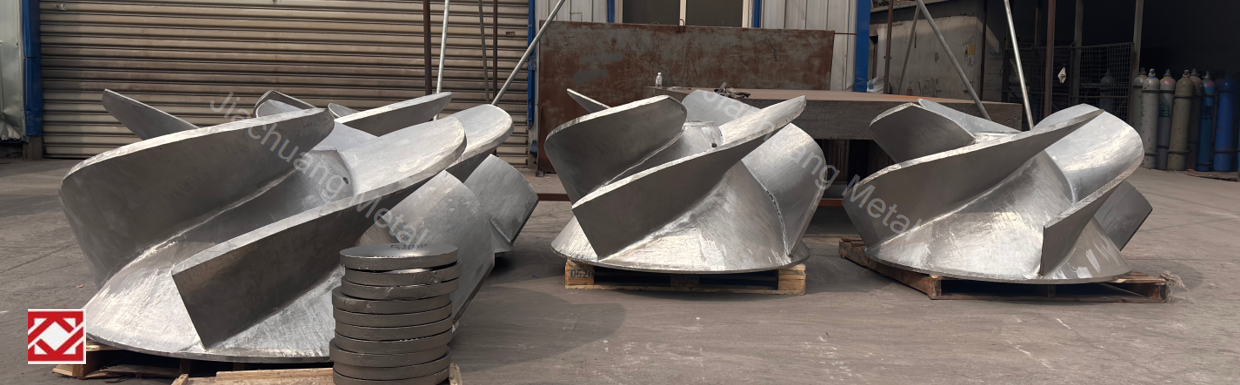
Why choose duplex steel 2205
Dual phase steel 2205 (UNS S32205/EN 1.4462) is a "dual phase" stainless steel with both austenitic and ferritic structures. Its comprehensive performance far exceeds ordinary stainless steels such as 304 and 316L, making it particularly suitable for harsh environments.
Excellent corrosion resistance: Its high content of chromium (22%), molybdenum (3%), and nitrogen makes it highly resistant to pitting and crevice corrosion in chloride containing environments such as seawater and chemical industry, far superior to 316L.
High strength and wear resistance: Its yield strength is twice that of ordinary austenitic stainless steel (≥ 450 MPa), which means that the impeller can be designed to be thinner and have excellent wear and corrosion fatigue resistance.
Excellent stress corrosion resistance: Its unique dual phase microstructure can effectively resist stress corrosion cracking caused by chloride, which is a common failure mode of ordinary stainless steel in specific environments.
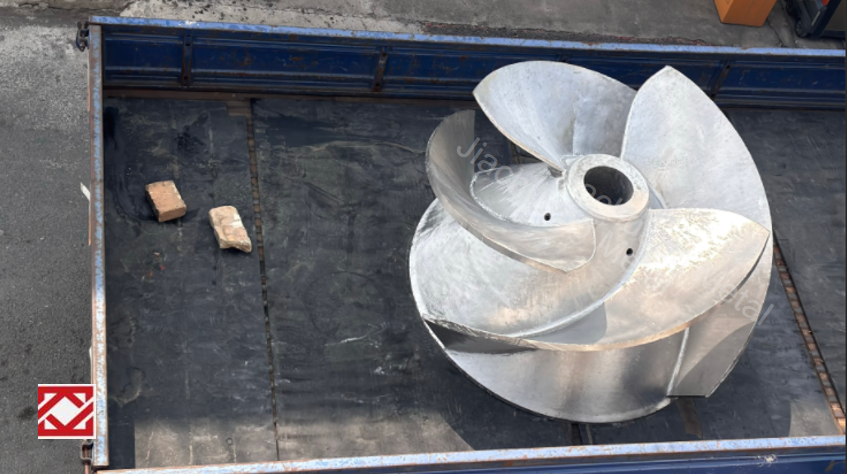
Manufacturing Process and Selection Recommendations
The impeller structure of vertical axial flow pumps is complex and is typically formed using precision casting processes (such as silica sol lost foam casting).
Process Advantages: Precision casting enables near-net-shape forming, with high dimensional accuracy (up to CT5 level) and excellent surface finish (Ra1.6). This significantly reduces the need for subsequent machining while ensuring uniform and dense internal microstructure of the casting, which is crucial for optimizing the performance of 2205 material.
Key post-processing: After casting, solid solution heat treatment (typically followed by rapid cooling at 1050-1100°C) is essential. This step ensures the 2205 material achieves the desired 50:50 austenite-ferrite microstructure, eliminates internal stresses, and attains optimal corrosion resistance
Selection suggestion:
For conventional seawater transportation, chemical media and other working conditions, choosing impellers made of 2205 material can already provide excellent performance and service life, with high cost-effectiveness.
If the working conditions are extreme, such as deep-sea environments, extremely high concentrations of chloride ions, or strong acid and alkali environments, the use of 2507 material with stronger corrosion resistance should be considered.