

In industries such as fine chemicals and petrochemicals, chemical pumps are expected to run continuously under high temperature, high pressure, and highly corrosive conditions. When leakage, casing cracks, or repeated failures occur, many users choose to replace the entire pump. In reality, the pump casing is often the key factor that determines both corrosion resistance and the overall service life of a chemical pump.
The Critical Role of the Pump Casing in a Chemical Pump:
A chemical pump casing is not just an outer shell. It is one of the most critical pressure-bearing and protective components in the entire pump system.
During operation, the casing must continuously withstand direct contact with corrosive media, system pressure fluctuations, temperature changes, and thermal or hydraulic shocks caused by frequent start-stop cycles. If the casing material or structural design is not suitable for the actual operating conditions, corrosion, local cracking, or flange sealing failure can occur. Once this happens, pump shutdown becomes unavoidable.
From an engineering perspective, the long-term reliability of a pump often depends on the quality of its Pump casing casting.
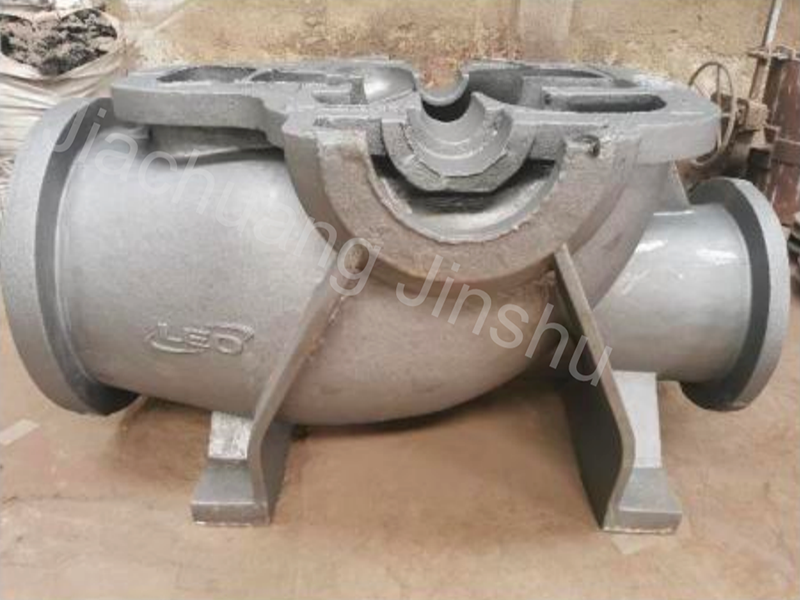
Key Factors That Determine the Corrosion Resistance of a Chemical Pump Casing.
1. Whether the Material Truly Matches the Medium:
In chemical applications, there is no single material that works for all media. Typical operating demands include strong corrosive liquids, high-temperature or alternating hot-and-cold conditions, and high-pressure transport.
As a manufacturer focused exclusively on pump casings, we offer a wide range of materials, including stainless steels, carbon steels, alloy steels, and grades such as Z5CND13-04. Material selection is customized based on the customer’s actual media and operating conditions, rather than using a one-size-fits-all approach. This is a critical step in ensuring long-term corrosion resistance and stable performance for any Pump casing casting.
2. Structural Design and Its Impact on Durability:
Material alone is not enough. The internal structure of the pump casing plays a major role in corrosion behavior and service life.
Poor structural design can lead to media stagnation inside the flow passages, uneven wall thickness that causes stress concentration, and excessive wear at volute tongues or sharp turns. Under high pressure or high temperature, these weaknesses become even more pronounced.
For API 610 process pump casings, high-pressure volute casings, and split casings, we focus on optimizing flow paths and load distribution during the design stage. This helps maintain stable internal stress levels over long-term operation and slows down corrosion-related damage.
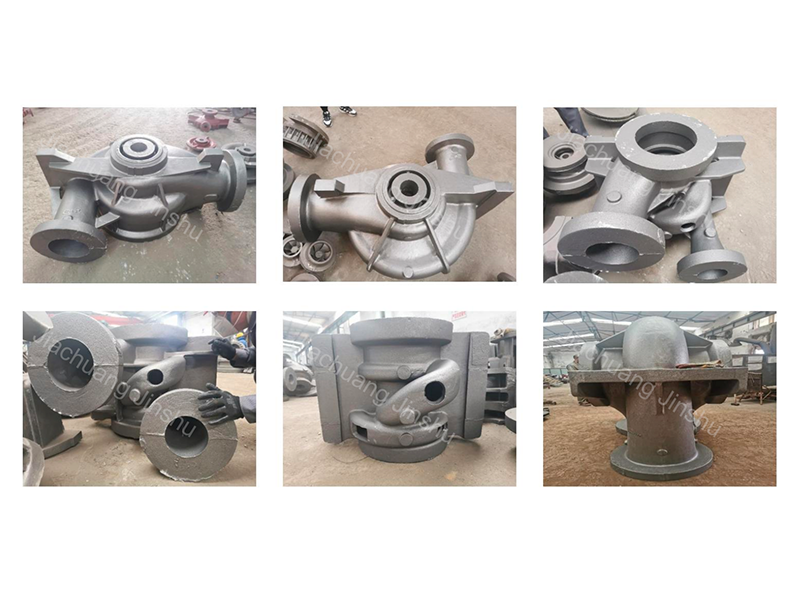
3. Manufacturing Process and Internal Quality:
Compared with cast iron, cast steel pump casings require much stricter control over manufacturing processes and quality assurance. Typical risks include shrinkage cavities, inclusions, and internal porosity, all of which can significantly reduce pressure resistance and corrosion performance.
In our production process, we use sodium silicate sand casting for standard components and resin sand casting for high-precision requirements. Casting simulation software such as MagmaSoft is applied to optimize gating and riser design, ensuring directional solidification and dense internal structures.
All casings can be inspected using Level 2 or Level 3 radiographic testing (RT) . We achieve the final quality standards by combining the client's specific needs with our industry experience (professionalism). This level of control is essential for delivering reliable Pump casing casting solutions to demanding chemical applications.
How the Pump Casing Directly Affects Pump Service Life.
In real-world operation, casing-related issues often trigger a chain reaction. Corrosion reduces wall thickness and increases leakage risk. Casing deformation affects mechanical seals and flange connections. Local defects grow under pressure cycles and may eventually lead to catastrophic failure.
Compared with repeatedly replacing entire pumps, a well-designed and properly manufactured pump casing can significantly extend the service life of the whole pump while reducing maintenance costs and unplanned downtime.
As one of China’s leading industrial pump component manufacturers, we specialize in the development and production of pump casings and related castings, with an annual supply capacity of up to 2,000 tons. Our goal is not simply to supply parts, but to provide long-term, application-specific solutions that truly match our customers’ operating conditions.