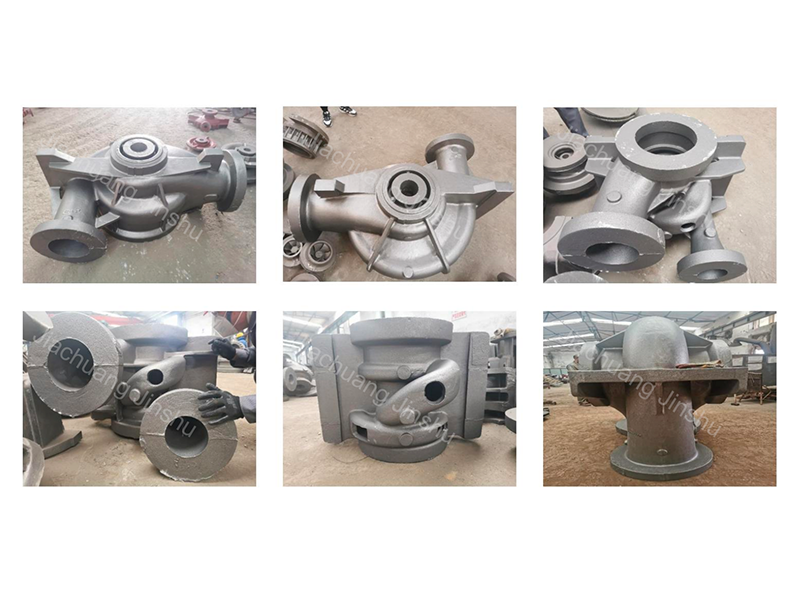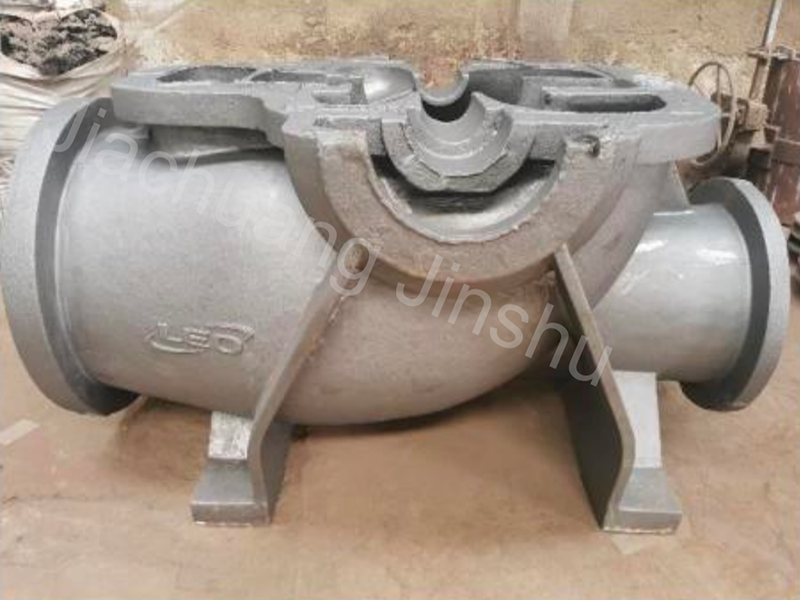
Introduction of Pump casing casting:
In critical industrial processes, there is no room for component failure. When operating conditions exceed the limits of cast iron—whether due to high pressure, thermal shock, or safety regulations—engineers turn to our Pump casing casting solutions.
We are a specialized steel foundry and machining facility dedicated to producing high-integrity pump components. Unlike brittle iron, our steel castings offer better ductility, weldability, and impact toughness. From standard ANSI process pumps to complex multistage boiler feed pumps, we manufacture WCB Pump Housings that ensure the safety and reliability of your fluid handling systems.
Technical Specifications of Volute pump housing:
Product Name: API 610 Process Pump Casing / High-Pressure Volute / Split Case Body
Casting Process: Sodium Silicate Sand Casting (for standard parts) / Resin Sand Casting (for high precision)
Material Grades (ASTM/DIN):
Carbon Steel: ASTM A216 WCB, WCC (The industry standard for general high-pressure use).
Low Alloy Steel: ASTM A217 WC6, WC9, C5, C12 (For high-temperature applications).
Low Temp Steel: ASTM A352 LCB, LCC (For cryogenic applications).
Weight Range of Volute pump housing: The minimum single piece weight can be as low as tens of kilograms, and the maximum can reach 8-10 tons.
Pressure Rating: Class 150, Class 300, Class 600, up to Class 1500 (PN25 - PN250).
Temperature Range: -46°C to +425°C (depending on grade).
Machining: Full CNC machining to tolerances of +/- 0.02mm.
NDT Standards: Level II or Level III Radiography (RT), Magnetic Particle (MT).
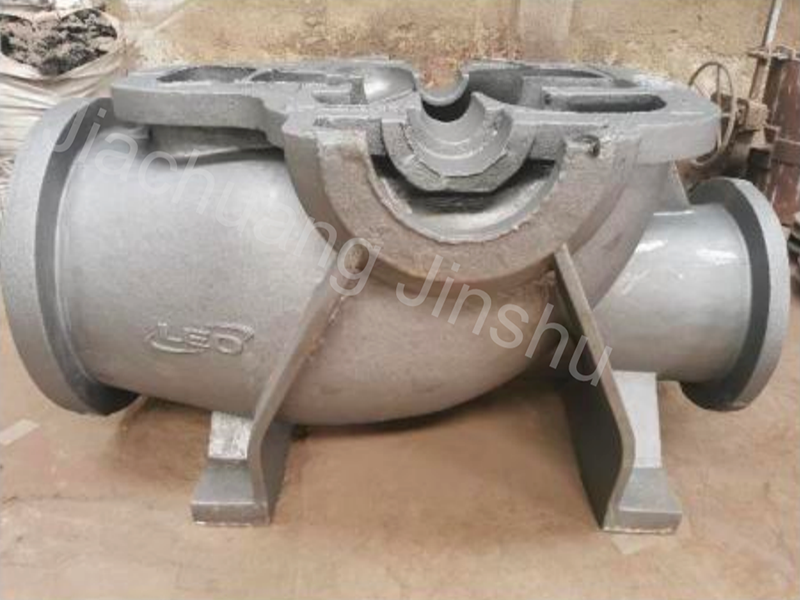
Key Features & Advantages of Volute pump housing:
Why do global pump factorys choose our Custom Steel Casting services?
1. Strength and Safety:
The primary reason to choose a Cast Steel Pump Casing is safety. In the oil and gas or power generation sectors, a casing rupture can be catastrophic. Our Pump Housing provides excellent tensile strength (min 485 MPa) and ductility. Unlike cast iron, which shatters under impact, cast steel yields, providing a critical safety margin against hydraulic surges or water hammers.
2. Designed for High Pressure & Temperature:
Our Pump casing casting designs are manufactured to withstand rigorous environments.
Thermal Shock Resistance: Capable of handling rapid temperature changes without cracking.
Weldability: One of the biggest advantages of Cast Steel Pump Casing is that it can be welded. If a flange face is damaged in the field or minor defects are found, steel allows for code-compliant weld repairs—something impossible with cast iron.
3. Internal Soundness & Radiographic Quality:
Shrinkage porosity is the main challenge in steel casting. We utilize advanced casting simulation software (MagmaSoft) to optimize riser placement and gating systems. This ensures directional solidification, resulting in a dense, defect-free internal structure. We can guarantee castings that meet ASTM E446 / E186 Level 2 or 3 requirements for X-ray inspection.
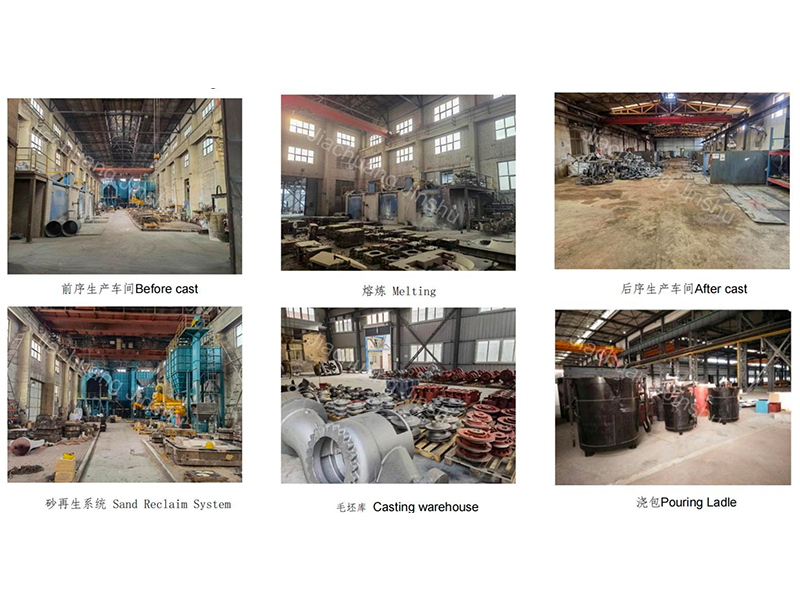
Quality Control: The Steel Standard:
Manufacturing Custom Steel Casting requires stricter control than iron. Our Quality Assurance Plan (QAP) includes:
Spectrometer Analysis: Verifying Carbon, Manganese, Silicon, and trace elements to ensure compliance with ASTM A216/A217.
Heat Treatment: We perform Normalization or Quenching & Tempering to refine the grain structure and maximize mechanical properties. Charts are provided with every batch.
Non-Destructive Testing (NDT):
MT (Magnetic Particle Testing): 100% inspection of fillets and machined surfaces to check for surface cracks.
UT (Ultrasonic Testing): To check wall thickness and internal soundness.
RT (Radiography/X-Ray): Available upon request for critical areas (flanges, volute tongues).
Dimensional Inspection: Using CMM and 3D Laser Scanning to verify complex volute geometries against your CAD models.
FAQ:
Q: What is the difference between Cast Iron and Cast steel pump casing casting?
A: Cast Steel Pump Casing is much stronger, ductile, and weldable. It can handle much higher pressures and temperatures compared to Cast Iron, which is brittle and limited to lower pressure ratings.
Q: Do you offer NDT (Non-Destructive Testing) reports?
A: Absolutely. Standard reports include Chemical, Mechanical, and Heat Treatment charts. Optional NDT (RT, MT, UT, PT) reports are available based on your specifications.
Q: Can you machine the casing completely?
A: Yes, we deliver fully machined parts, hydro-tested and ready for assembly. We can also supply the casing "rough machined" if you prefer to finish the critical tolerances in-house.