

Dalian Jiachuang Metal is a key sand casting manufacturer in china and also a fish fiendly pump impeller manufactrurer supplys international pump manufacturer.We have manufacturering experience and to know customer demand provides high quality impeller in the industry.
The fishery pump impeller is not a universal standard water pump impeller, but rather a flow-passing component specifically designed for scenarios such as live fish transportation, aquaculture water circulation, or fish harvesting. Its core design logic is to ensure pumping efficiency while minimizing mechanical damage to fish bodies and addressing corrosion and clogging issues in marine and freshwater environments.
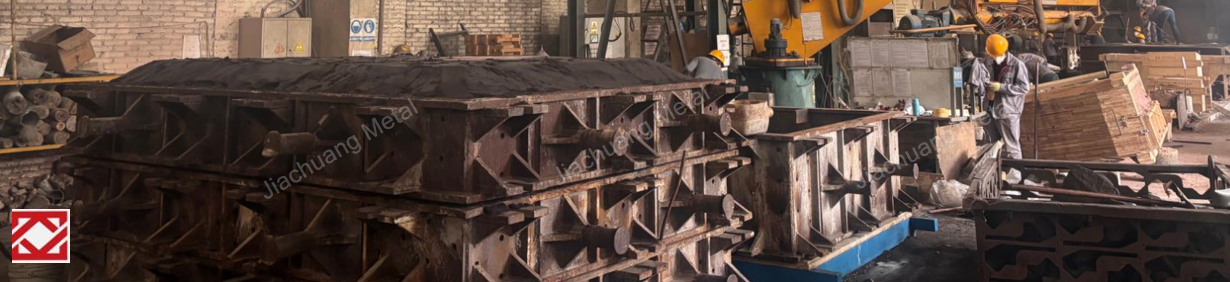
1. Core Types and Design Features
Dual/ Wide Flow Impeller: This is the mainstream design for live fish transfer pumps (fish suction pumps). Typically featuring two or more spacious flow channels with no sharp blades obstructing the path, the large cross-sectional area ensures smooth passage of fish bodies without shearing or jamming, significantly reducing fish scale loss and body surface abrasions.
Clog-free closed/semi-open impeller: Commonly used for sewage discharge in aquaculture ponds or seawater transportation. Features fewer blades (typically ≤3), thickened and chamfered inlet edges or blunt body design, with streamlined curves such as logarithmic spirals to minimize fluid disturbance and debris entanglement.
Axial/ mixed-flow impeller: Primarily used for high-flow recirculation or low-head drainage pumps in aquaculture ponds, emphasizing energy-efficient water transport with large discharge volumes.
Special Coatings or Materials for Impellers: Some high-end fish pumps feature flexible coatings (such as rubber-based) on aluminum alloy or metal impellers, or directly use rubber or neoprene materials to cushion the impact force when fish collide.
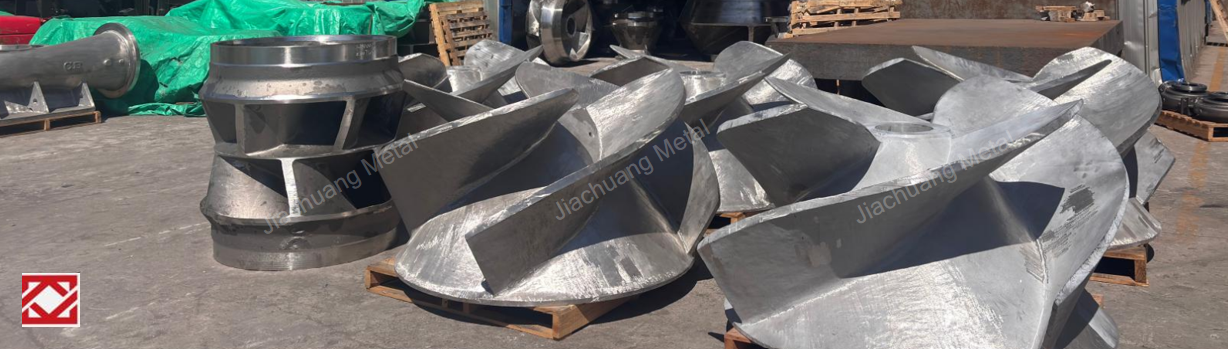
2. Common Materials
Aluminum bronze (e.g., ALBC3): A commonly used material for fishing pumps, particularly suitable for seawater aquaculture, offering excellent resistance to seawater corrosion and wear.
Stainless steel (304/316): High versatility, corrosion-resistant, suitable for freshwater aquaculture or mild corrosion environments.
Rubber/polymer materials: Primarily used for fish-passing components in direct contact with fish bodies, serving a protective function.
Cast iron/wear-resistant alloy: Primarily used in rough dredging scenarios such as fish pond cleaning and sand extraction, where wear resistance is prioritized without the need to consider fish body damage.
3. Key Selection and Maintenance Considerations
Flow-through particle size: During selection, it is necessary to confirm the maximum solid/fish body size that the impeller flow path can accommodate, typically requiring the flow path capacity to exceed the diameter of the largest farmed fish.
Speed control: Live fish transport pumps are typically equipped with low-speed motors (around 750 rpm), reducing the impeller's linear velocity to minimize damage caused by centrifugal force compression and impact on the fish body.
Gap and Chamfering: Check whether the gap between the impeller and the pump casing tongue is appropriate (excessive leakage if too large, scraping if too small), and ensure all overcurrent edges have been chamfered or rounded.
Anti-clogging: Algae or tangled fishing net debris can easily grow in aquaculture water, requiring regular cleaning of the impeller flow channel to prevent eccentric vibration.