

The casting of large impeller (usually referring to outer diameter>500mm, or belonging to large thin-walled and complex flow channel structures) is a difficult point in the casting industry, due to its complex structure, uneven wall thickness, and extremely high requirements for flow channel accuracy and surface quality. The current mainstream process route selection and later defect control are the key factors determining success or failure.
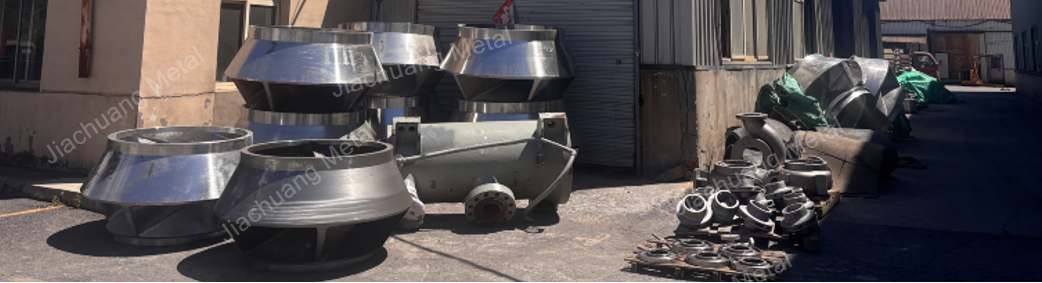
1、 Selection of mainstream casting processes
For different materials and precision requirements, the following three processes are commonly used for large leaf wheels:
Investment casting (wax loss method): It is the mainstream process for stainless steel and alloy steel impellers. Capable of reproducing complex blade surfaces with high dimensional accuracy (CT4-CT6), suitable for small and medium-sized complex impellers. But for ultra large sizes (such as>1 meter), wax molds are prone to deformation, making it difficult to control the strength of the shell.
Resin sand casting: suitable for large cast steel and iron impellers (such as power plant fan impellers with a diameter of several meters). Low cost and strong adaptability, but the casting surface is rough and the accuracy of the channel size is slightly inferior, requiring a large amount of polishing time in the future.
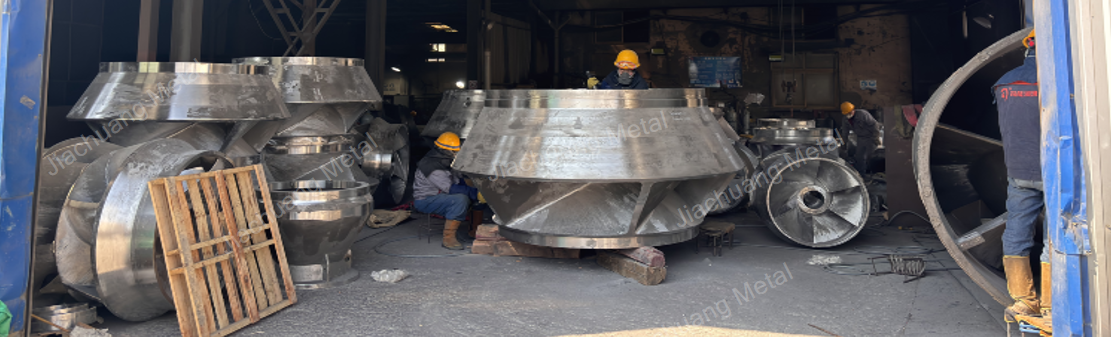
Composite casting (investment mold+sand mold): For impellers with "large size+complex blades", it is common to use investment mold shells for the blade parts and sand molds for the hub and spoke parts, which are combined and poured. Balancing blade accuracy with the implementation of large-scale structures.
Low pressure/gravity casting: commonly used for large aluminum and copper alloy impellers, with smooth filling and good shrinkage effect, which can effectively reduce porosity.
2、 Core process difficulties and countermeasures
The most troublesome aspects of large leaf wheel casting are incomplete filling, shrinkage porosity, and hot cracking
Filling and pouring system: The large impeller blades are thin, the flow channel is narrow, and the metal liquid is prone to premature cooling, causing "cold insulation" or "insufficient pouring". Bottom pouring, crevice pouring, or circular rain pouring are commonly used to allow the molten metal to rise smoothly; For thin-walled stainless steel impellers, it is sometimes necessary to increase the pouring temperature and accelerate the pouring speed.
Shrinkage and solidification control: The junction between the blade and the hub (hot spot) is prone to shrinkage and looseness. The process will be optimized by placing risers (open/dark) and cold iron, and using computer numerical simulation (CAE) to force the casting to form a "bottom-up" directional solidification sequence, ensuring that the liquid metal is replenished in place.
Anti deformation and crack prevention: Large sized thin-walled parts have uneven cooling and high stress, which can easily lead to warping deformation or cracks. In addition to optimizing the casting structure (to avoid sudden changes in wall thickness), forming cold iron is often used for molding, and good yielding molding sand is selected; Stainless steel parts need to pay attention to the cooling rate to prevent the precipitation of brittle phases from causing cracks.
3、 Common Defects and Preventive Measures
Pores: Due to the occurrence of gas in the molding sand, poor exhaust, or the presence of gas in the molten metal. It is necessary to control the moisture content of the molding sand, increase the gas outlet riser, and set up a filter screen. For important components, vacuum casting or vacuum degassing melting can be used.
Slag inclusion/sand hole: slag inclusion caused by peeling off from the pouring system or oxidation of molten metal. It is necessary to strengthen the cleaning of the mold cavity, use fire-resistant filters, ensure the slag blocking design of the pouring system, and ensure the settling time of the molten metal.
Cracks: Hot cracks are often caused by obstructed shrinkage. It is necessary to optimize the position of the riser to avoid pulling, control the sulfur and phosphorus content, and ensure that the mold has sufficient retreat.
Before casting modern large leaf wheels, software such as ProCAST and AnyCasting are usually used to simulate filling and solidification,