

14th April 2026
Sand casting is currently the most widely used and adaptable casting process in industrial applications, particularly suitable for manufacturing pump bodies that are large, heavy, structurally com
plex, or made from special alloy materials (such as stainless steel or duplex steel).
Compared to die casting, sand casting is not limited by part size or weight; compared to precision casting, it has lower mold costs and is more suitable for single-piece or small-batch production.
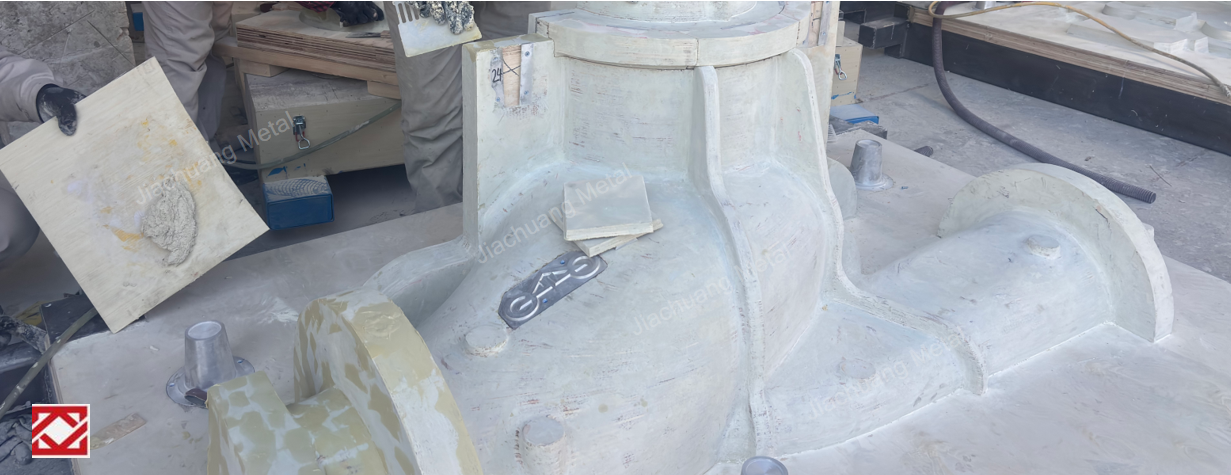
Here is an in-depth analysis of the sand casting process for pump bodies, covering all aspects from molding techniques and key challenges to industry standards
Core Shaping Technology
In pump body manufacturing, sand casting is primarily divided into two major molding techniques, which determine the precision and surface quality of the castings:
Resin Sand Casting
Principle: Using resin as the binder, the original sand is mixed and filled around the model, forming a hard sand mold after curing.
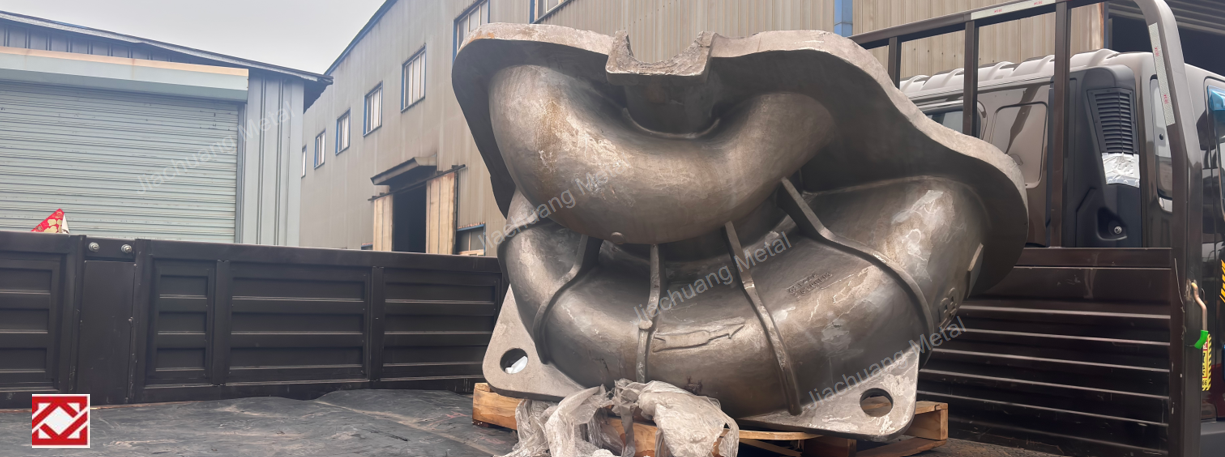
Features: The sand mold exhibits high strength, superior dimensional accuracy of castings, and better surface finish compared to traditional clay sand.
Application: Widely used in the production of medium and large pump bodies, double suction pumps, and multi-stage pump casings. For instance, large foundry companies such as Jiangsu Wanhang employ resin sand technology to produce pump and valve castings weighing several tons.
3D Sand Printing
Principle: Utilizing 3D printing technology to directly spray and bind sand layers, eliminating the need for wooden or metal molds.
Advantages: It significantly shortens the R&D cycle, enables the creation of complex internal flow channels (such as spiral-shaped pressure chambers) unachievable with traditional processes, and eliminates errors from parting surfaces.
Key Technical Challenges and Solutions
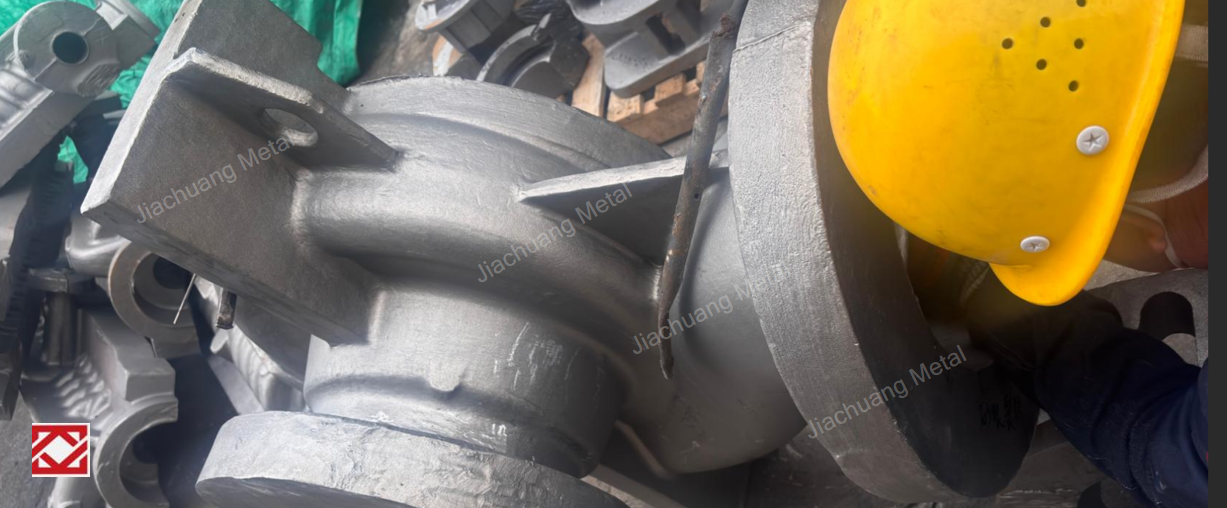
The pump casing (especially the centrifugal pump casing) typically features complex spiral flow channels and uneven wall thickness, which are highly prone to defects during sand casting.
Cracking defect
Reason:
Material characteristics: For example, CA15 martensitic stainless steel has poor thermal conductivity and undergoes volume expansion during phase transformation, making it highly prone to cold cracking.
Structural Design: The wall thickness of components such as the pump body flange and support feet (≥70mm) is significantly greater than that of the pump casing (approximately 15mm), resulting in substantial thermal stress due to uneven cooling rates.
Sand resistance: The excessive strength of resin sand and its poor yielding properties hinder the contraction of castings.
Solution:
Process Optimization: Control the demolding time (e.g., 4-6 hours after pouring) to prevent premature demolding-induced quenching cracks.
Heat Treatment: After demolding, the castings are immediately placed in the furnace for high-temperature (1100-1150°C) heat preservation, followed by rapid or stepwise cooling to eliminate stress and prevent the formation of brittle structures.
Composition control: Strictly control the carbon content (e.g., below 0.1%) to reduce martensitic phase transformation stress.
2. Cores and Blowholes
Challenge: The inlet and outlet flow channels of the pump body are typically formed by sand cores. The traditional horizontal pouring method requires a large number of "core supports" to stabilize the sand cores, which often leads to porosity or poor fusion at the support locations, resulting in leakage during hydrostatic testing.
Solution:
Vertical sand core: Alter the molding method by vertically positioning the inlet and outlet sand cores, utilizing gravity for self-locking to reduce or eliminate the need for core supports.
Integral printing: Utilizing 3D printing technology to produce hollow sand cores with internal reinforcing ribs not only ensures high strength but also eliminates the need for assembly, removing the risks of fit errors and gas porosity at seams.